50/30/20 Budget Rule: Can It Still Work Today?
The 50/30/20 budget rule simplifies money management, but rising living costs are testing its effectiveness. Adapting the model is becoming essential.
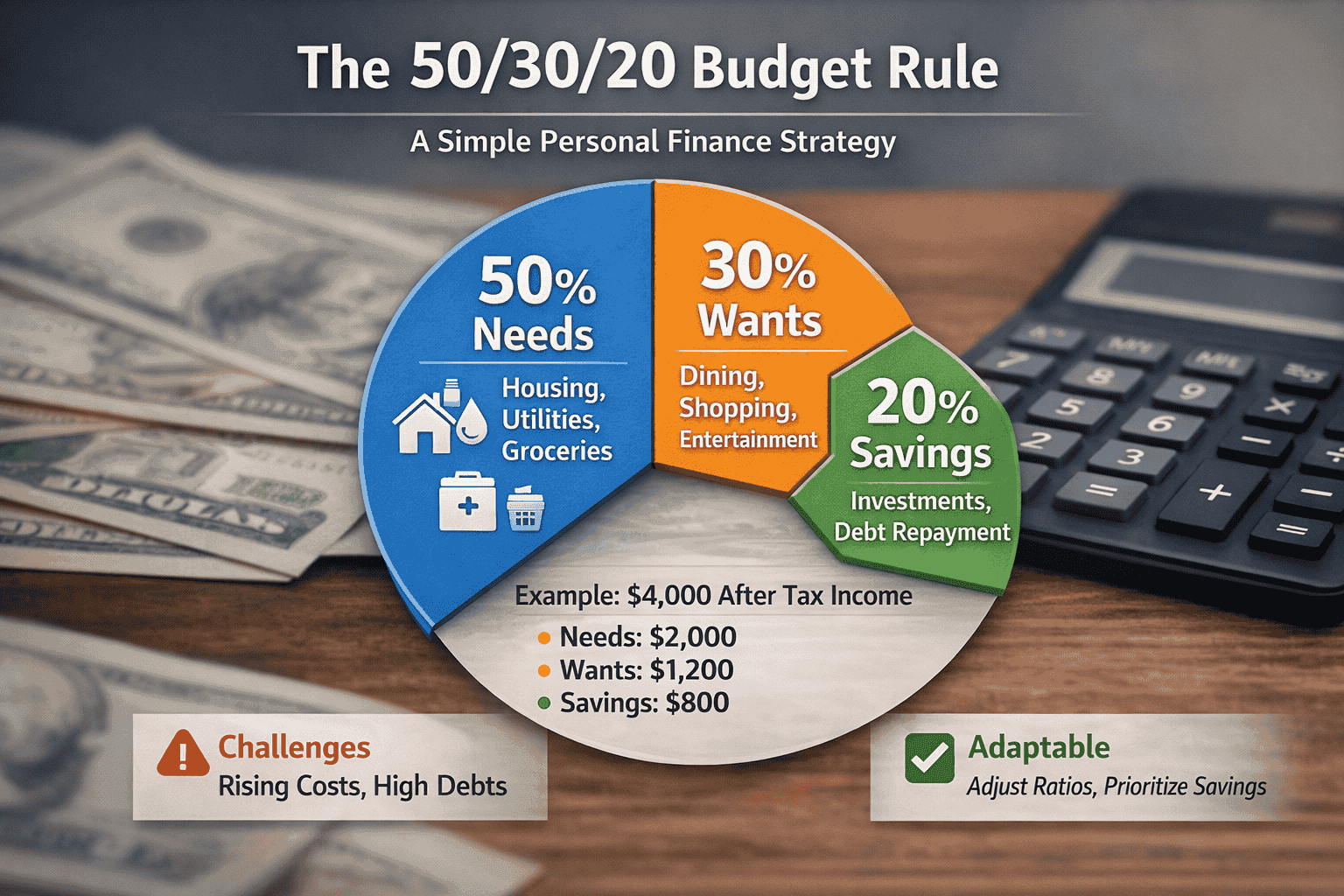
The 50/30/20 budget rule remains a foundational personal finance strategy, allocating after-tax income into three buckets: 50% for needs, 30% for wants, and 20% for savings. Its simplicity has driven widespread adoption, particularly among first-time budgeters.
How the 50/30/20 Budget Rule Works
The framework divides expenses into essential and discretionary categories. “Needs” include rent, utilities, groceries, insurance, and transportation—costs that are largely non-negotiable.
“Wants” cover lifestyle spending such as dining out, subscriptions, travel, and entertainment. The remaining 20% is allocated to savings, including investments, emergency funds, and debt repayments above the minimum.
This structured expense allocation enables individuals to maintain financial discipline without relying on complex tools or detailed tracking systems.
Simplicity Drives Adoption
The biggest strength of the 50/30/20 budget rule is its clarity. Unlike spreadsheet-heavy methods, it requires only income awareness and basic categorization.
Financially, the 20% savings target is significant. Over the long term, consistent saving at this level can generate substantial wealth through compounding, making it a powerful financial planning tool.
Rising Living Costs Are Disrupting the Model
Economic shifts are increasingly challenging the model’s practicality. Housing, healthcare, and food costs have risen sharply, often pushing essential spending beyond the 50% threshold.
As a result, many households struggle to maintain the recommended 20% savings rate. Alternative structures, such as 60/30/10, are gaining traction as they better reflect current cost realities.
This shift highlights a key limitation: the rule was designed in a different economic environment, making rigid adherence less feasible today.
Limitations in Real-World Application
Despite its popularity, the budgeting method has notable constraints. It does not account for high debt burdens, forcing users to include repayments within the savings category.
Additionally, distinguishing between “needs” and “wants” can be subjective. Expenses like gym memberships or mental health services often blur these boundaries, complicating implementation.
For families, particularly those with childcare costs, essential expenses can rise to 60–70% of income, making the original ratio impractical.
Flexibility Determines Effectiveness
The long-term relevance of the 50/30/20 budget rule lies in its adaptability. Adjusting the ratios to reflect income levels, geographic cost differences, and financial goals ensures sustainability.
Rather than a fixed formula, it should be treated as a baseline framework—one that emphasizes saving discipline while allowing flexibility in execution.
As economic pressures persist, personalized budgeting approaches are likely to replace rigid models.
Market Implication:
Lower household savings capacity could reduce retail investor participation and slow long-term capital formation.