What Is Upper and Lower Circuit in NEPSE? Limits Explained Simply
Ever seen a NEPSE stock freeze with "U/C" or "L/C"? That’s an upper or lower circuit. This guide breaks down how circuit limits work, why they're enforced, and how you can use them to trade smarter in Nepal's stock market.
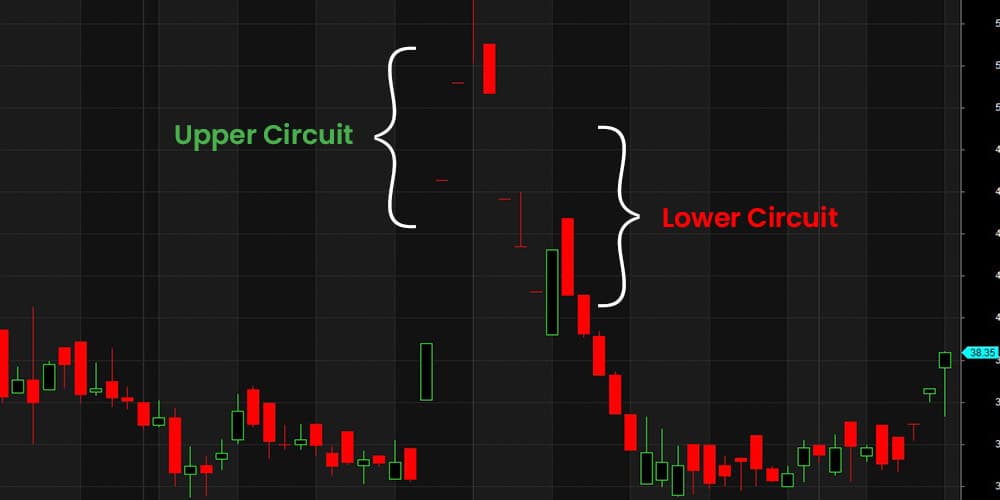
Introduction: What Are Circuits in NEPSE and Why Do They Matter?
If you’ve traded in NEPSE, you’ve probably seen stocks tagged as U/C (Upper Circuit) or L/C (Lower Circuit). But what exactly does that mean?
Circuits are daily price movement limits placed by NEPSE to prevent extreme volatility and manipulation. When a stock hits the upper or lower circuit, trading for that stock is automatically frozen—you can’t buy or sell beyond that price.
Let’s simplify what circuits are, how they’re calculated, and how smart investors use this info to their advantage.
1. What is an Upper Circuit and Lower Circuit?
🔼 Upper Circuit (U/C):
The maximum price a stock can rise in a single trading day.
🔽 Lower Circuit (L/C):
The lowest price a stock can fall in a single trading day.
Once a stock hits either limit, no further orders beyond that price are allowed.
This protects both the market and investors from:
Pump-and-dump schemes
Panic selling
Extreme volatility
2. NEPSE Daily Circuit Limit Structure (2025)
NEPSE follows different circuit levels based on stock category and market capitalization.
Stock Type | Daily Circuit Limit |
|---|---|
Regular Listed Stocks | ±10% |
IPO/Right Share on First Trade | ±50% on listing day |
Stocks Trading After Suspension | ±5% on first day |
Mutual Funds | ±4% |
Preference Shares | ±2% |
Debentures | ±2% |
🧠 Note: These limits are recalculated daily based on the previous day’s closing price.
3. Example: How Circuits Are Calculated in NEPSE
Let’s say a stock (e.g., NICA) closed yesterday at Rs. 400.
Upper Circuit = 400 + (10%) = Rs. 440
Lower Circuit = 400 - (10%) = Rs. 360
So today:
Price cannot go beyond Rs. 440 or below Rs. 360
If the stock hits either limit, trading is paused/frozen at that price
4. What Happens When a Stock Hits a Circuit?
📌 Key Behaviors:
Order book freezes at the circuit price
You can place orders, but they stay pending
Buyers/sellers may get stuck if there’s no counter order
🔼 If it hits Upper Circuit:
Strong demand but no sellers
Stock may be in bullish momentum or being hyped
🔽 If it hits Lower Circuit:
Panic selling but no buyers
Stock may be reacting to negative news or manipulation
5. Why Does NEPSE Use Circuit Breakers?
🚫 Prevent manipulation: Limits wild speculative swings
🛡️ Protect investors: Prevents massive intraday losses
🧠 Control market panic: Stops emotional, herd-driven selling
⚖️ Stabilize liquidity: Ensures smoother price discovery
Circuit rules are part of NEPSE’s risk management system, aligned with global standards.
6. Real NEPSE Examples of Circuit Hits
✅ Upper Circuit Example:
SHPC announced a bonus + hydro expansion news.
Closed previous day at Rs. 500
Hit Rs. 550 (U/C) within 10 mins of open
→ Trading froze as there were only buyers, no sellers
❌ Lower Circuit Example:
SMFDB declared poor quarterly results.
Opened at Rs. 850 → dropped to Rs. 765 (L/C)
→ Sellers queued, but no buyers showed up
7. How to Use Circuit Data for Trading Strategy
🔍 1. Spot Momentum Stocks Early
Stocks frequently hitting upper circuits are likely in strong bullish trends.
Use platforms like Nepalytix to:
Scan top U/C and L/C hits daily
Track how many times a stock hit circuits in the last 7 days
📈 2. Predict Reversal or Continuation
A stock stuck at U/C for 2–3 days → momentum likely continues
A stock hitting L/C after bad news → may correct more after freeze lifts
⚠️ 3. Avoid Entry Near U/C or L/C
Entering at the circuit price is risky:
You may get stuck if no counterparty trades
Price may reverse the next day (gap-down or gap-up)
8. Common Myths About Circuits
Myth | Reality |
|---|---|
Circuits are bad for investors | 🚫 False – they prevent panic |
You can’t sell once circuit hits | 🚫 False – you can place orders at limit |
Circuit always means manipulation | ❌ Not always. Sometimes, news-driven momentum |
Hitting U/C means price will rise tomorrow too | 🚫 Not guaranteed. May reverse sharply after buzz fades |
9. Tools to Track Circuit Hit Stocks
You can use:
Nepal Stock Exchange (NEPSE) site: Shows price range per stock
Merolagani/ShareSansar dashboards: “Upper Circuit” / “Lower Circuit” sections
Nepalytix Live Data:
Circuit hit heatmaps
Volume + order book imbalance
Alerts for repeat circuit hitters
10. Final Thoughts: Circuits Are Guardrails, Not Walls
Upper and lower circuits are not price targets, but risk controls.
They exist to keep NEPSE stable, fair, and transparent.
✅ Use circuits to:
Identify trending stocks
Avoid emotional panic
Manage entry/exit better
❌ Don’t:
Chase stocks just because they hit U/C
Hold blindly expecting unlimited upside
Ignore volume and fundamentals behind the move
Disclaimer
This report has been prepared by Nepalytix for informational and educational purposes only and does not constitute investment advice, an offer, or a solicitation to buy or sell any securities.
The information contained in this report is based on sources believed to be reliable; however, Nepalytix does not guarantee its accuracy, completeness, or timeliness. Opinions, estimates, and projections expressed herein are those of the authors as of the date of publication and are subject to change without notice.
Investing in securities involves risks, including the possible loss of principal. Past performance is not indicative of future results. Readers are advised to conduct their own independent research and consult with a qualified financial advisor before making any investment decisions.
Nepalytix and its contributors may hold positions in the securities discussed in this report at the time of publication or thereafter.
Neither Nepalytix nor any of its affiliates accept any liability for any loss arising from the use of this report or its contents.