You applied for the IPO. You got nothing. Here is exactly why.
An IPO application is not a purchase. It is a lottery entry.

You applied for the IPO. You got nothing. Here is exactly why.

Every time an IPO opens in Nepal, the same thing happens. Hundreds of thousands of people apply. A fraction of them receive shares. The rest get their money back a few days later with no explanation, just a silent return to their blocked amount. Most people assume something went wrong. Nothing went wrong. The system worked exactly as designed.
This piece does exactly that. By the end of it, you will understand why you did not get shares last time, whether applying for more units actually helps, what the allotment formula looks like, and what the one move is that actually improves your odds.
Let’s start with the most important reframe.
An IPO application is not a purchase. It is a lottery entry.
When you buy shares on the secondary market (NEPSE) through your broker, you are executing a transaction. You offer a price, a seller accepts, and the shares are yours. Supply and demand, straightforward.
An IPO works completely differently. The company is offering a fixed number of shares at a fixed price. There is no negotiation. But the number of people who want those shares at that price is almost always much larger than the shares available. This is the core problem the allotment system exists to solve.

This is not a flaw. It is how every public market handles the gap between supply and demand when a company first lists. In Nepal, the system that manages this draw is called ASBA and the institution that runs the allotment is CDSC(Central Depository Service and Clearing Ltd.).
What ASBA actually does to your money
ASBA stands for Application Supported by Blocked Amount. The name is the entire explanation. When you apply for an IPO through Meroshare or your bank, the application amount does not leave your account. The bank puts a hold on it; the money is there, you can see it, but you cannot use it for anything else until the allotment is decided.
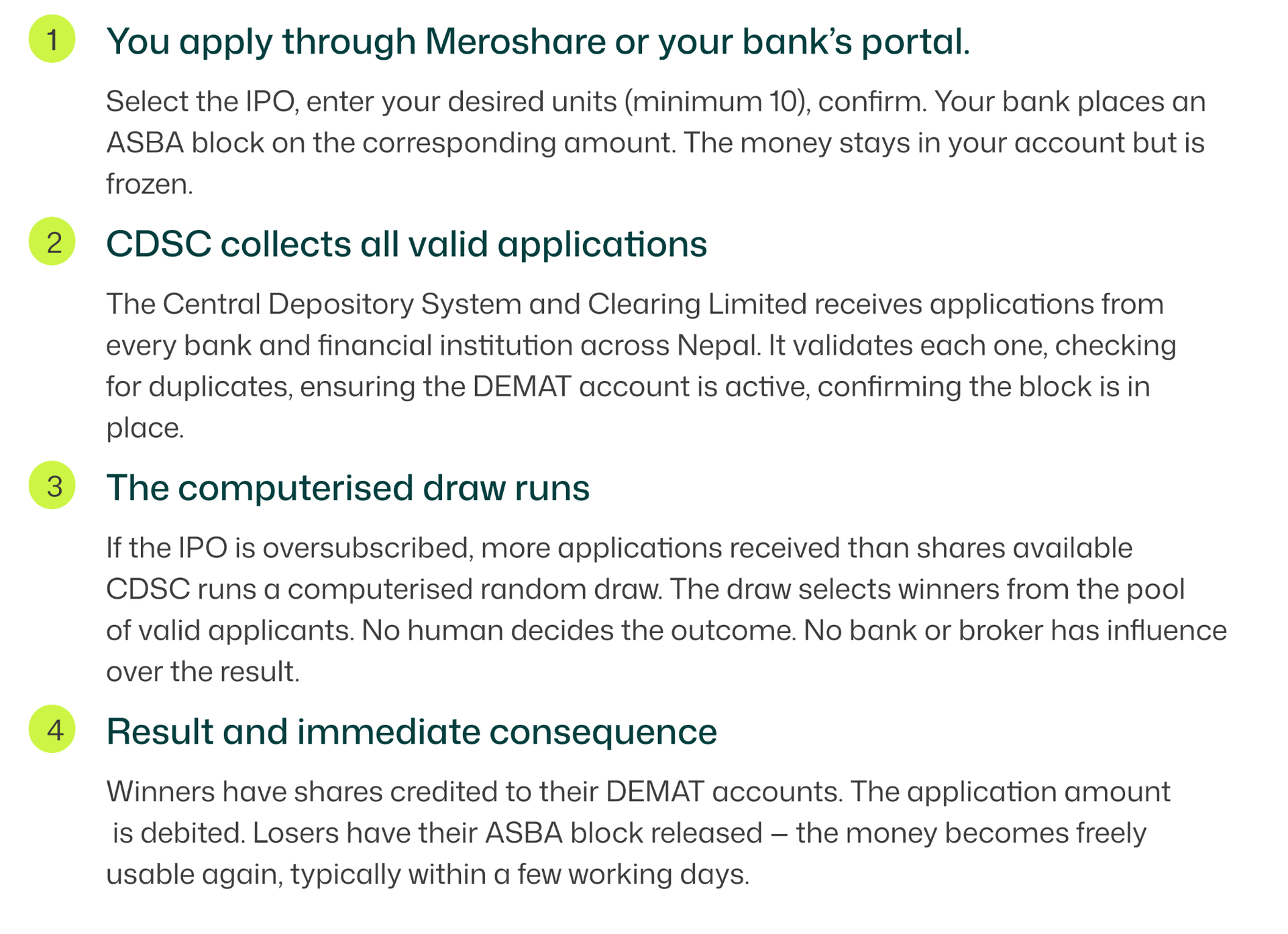
The entire process is designed to be fair and tamper-resistant. The draw is computerised, auditable, and public. Anyone who received an allotment can verify their result through Meroshare. Anyone who did not can verify the same.
The Kalinchowk Hydropower numbers, right now
Kalinchowk Hydropower Limited’s IPO is open as of this week. Here are the actual numbers you need to understand your odds.

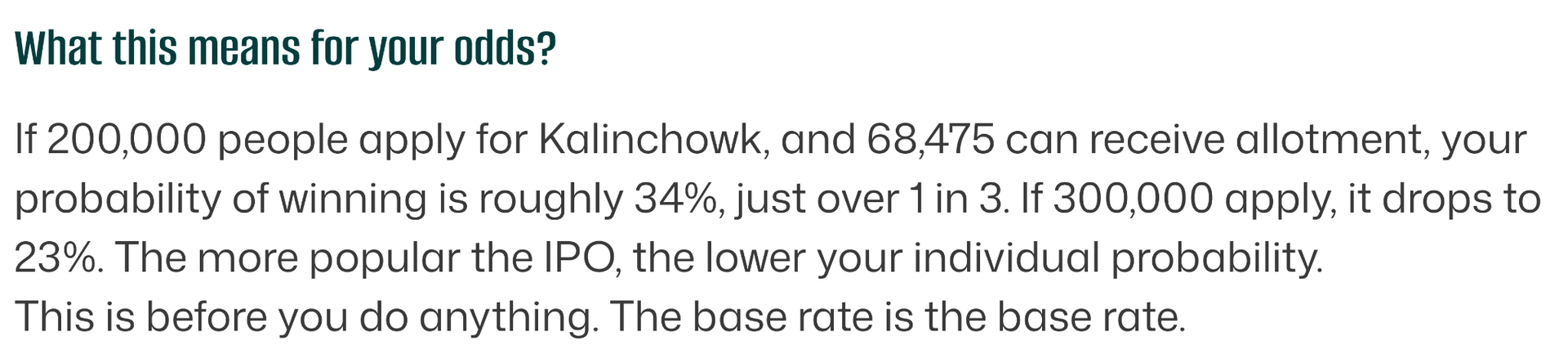
At a minimum allotment of 10 units, the maximum number of people who can receive shares is 68,475. That is the ceiling, and only if every single winner gets exactly the minimum.
Now consider the demand side. Nepal has over 5 million active DEMAT accounts. For a hydropower IPO, historically one of the most popular categories among retail investors, it is not unusual to see 150,000 to 300,000 applicants. Possibly more.
The things most people get wrong: applying for more units
This is the most common misconception in Nepal’s IPO ecosystem, and it costs people real money in opportunity cost.
If you apply for 100 units instead of 10, you do not improve your probability of winning the draw. The computerised random selection treats every valid application as one entry regardless of how many units were requested. One DEMAT account, one draw entry.
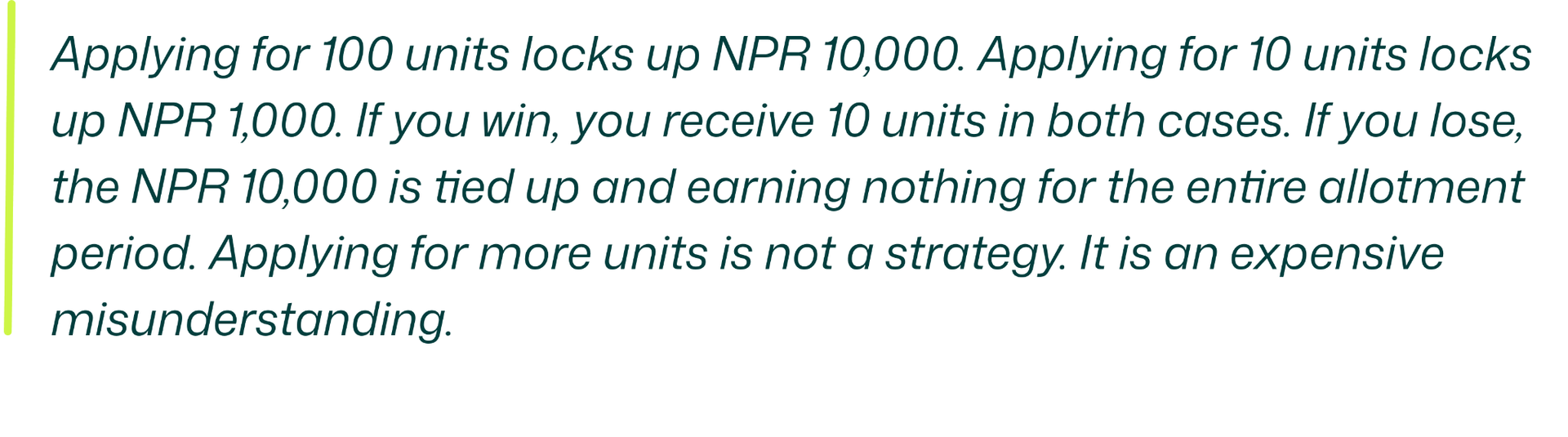
There is one exception to this. If the IPO is undersubscribed, with fewer applications than shares available, the allotment formula changes. In that case, applicants may receive more than the minimum 10 units, and the number of units you applied for does become relevant. But undersubscription is rare for reasonably priced IPOs in Nepal. If it happens, it usually signals something worth understanding about the company before you celebrate getting extra shares.
The allotment formula in plain language
When an IPO is oversubscribed, CDSC uses a formula to determine the allotment.
The core logic is:
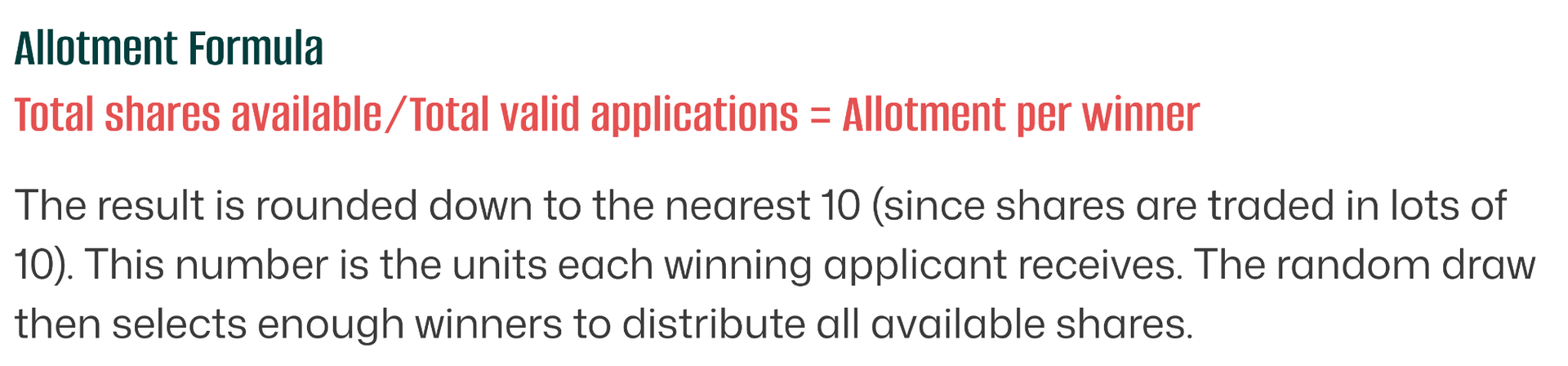
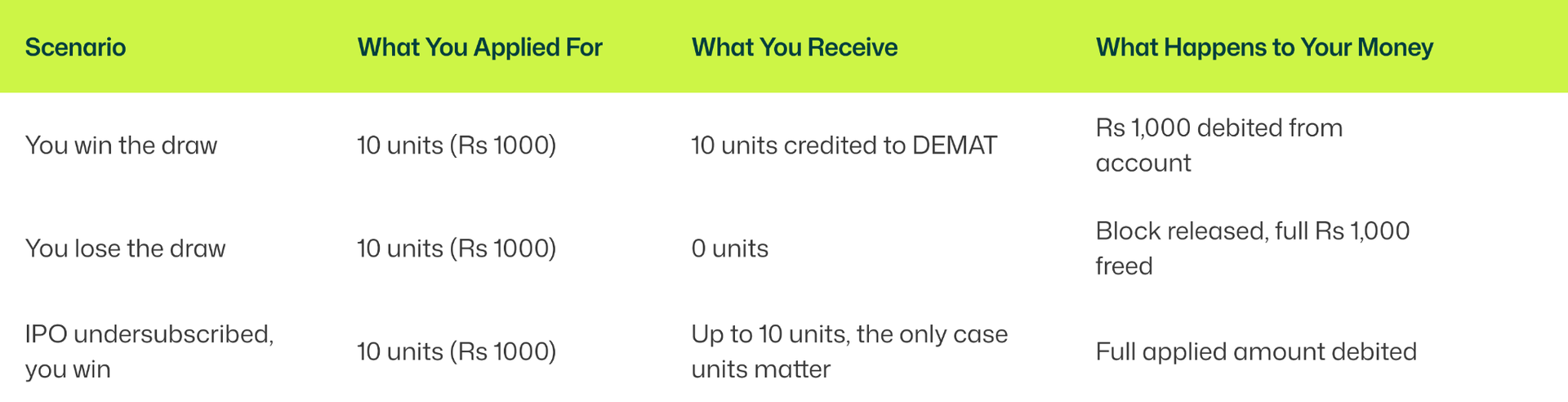
For Kalinchowk: 6,84,750 shares available. If 200,000 valid applications are received, the formula gives approximately 3.42 shares per applicant on average, which rounds to 0 in lot terms. This means not every applicant can receive shares. The draw picks 68,475 of them randomly, each receiving 10 units.
What actually happens to the result
The one move that actually improves your odds
Since each valid DEMAT account gets one draw entry, the only legitimate way to increase your probability of receiving allotment is to increase the number of entries your household submits.
If you and your spouse both have active DEMAT accounts, you can each apply independently. That is two entries in the draw. If your parents or adult children also have accounts, they can apply too. Each valid, independent application from a separate DEMAT account is a separate draw entry.
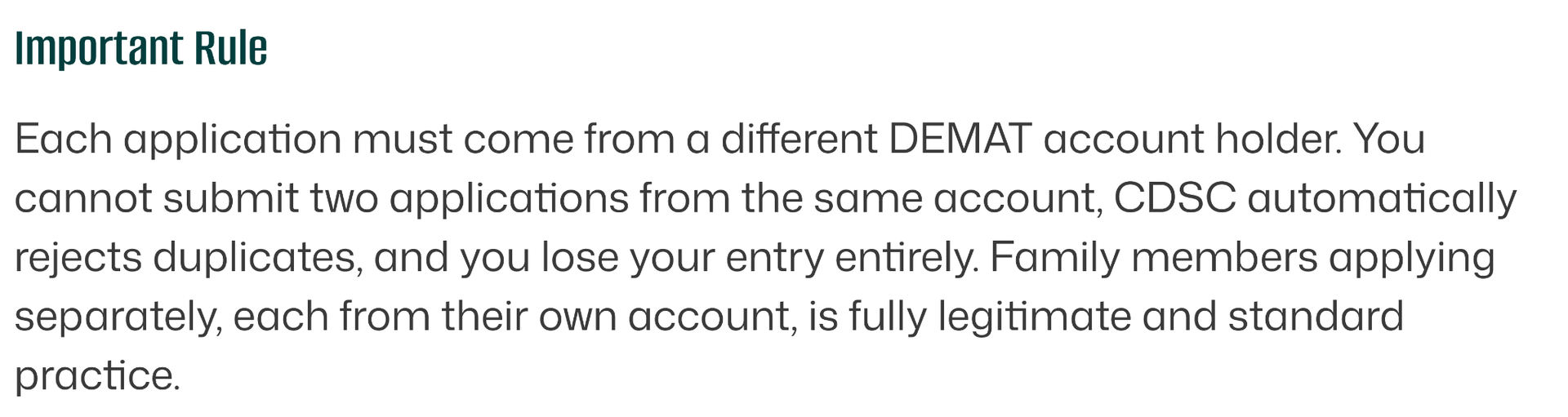
Beyond this, there is no trick. No timing advantage. No bank preference. No broker relationship helps.
What you should actually think about before applying
The allotment system is designed to be fair. Whether or not the IPO itself is worth applying to is a completely separate question and one that deserves more attention than most retail investors give it.
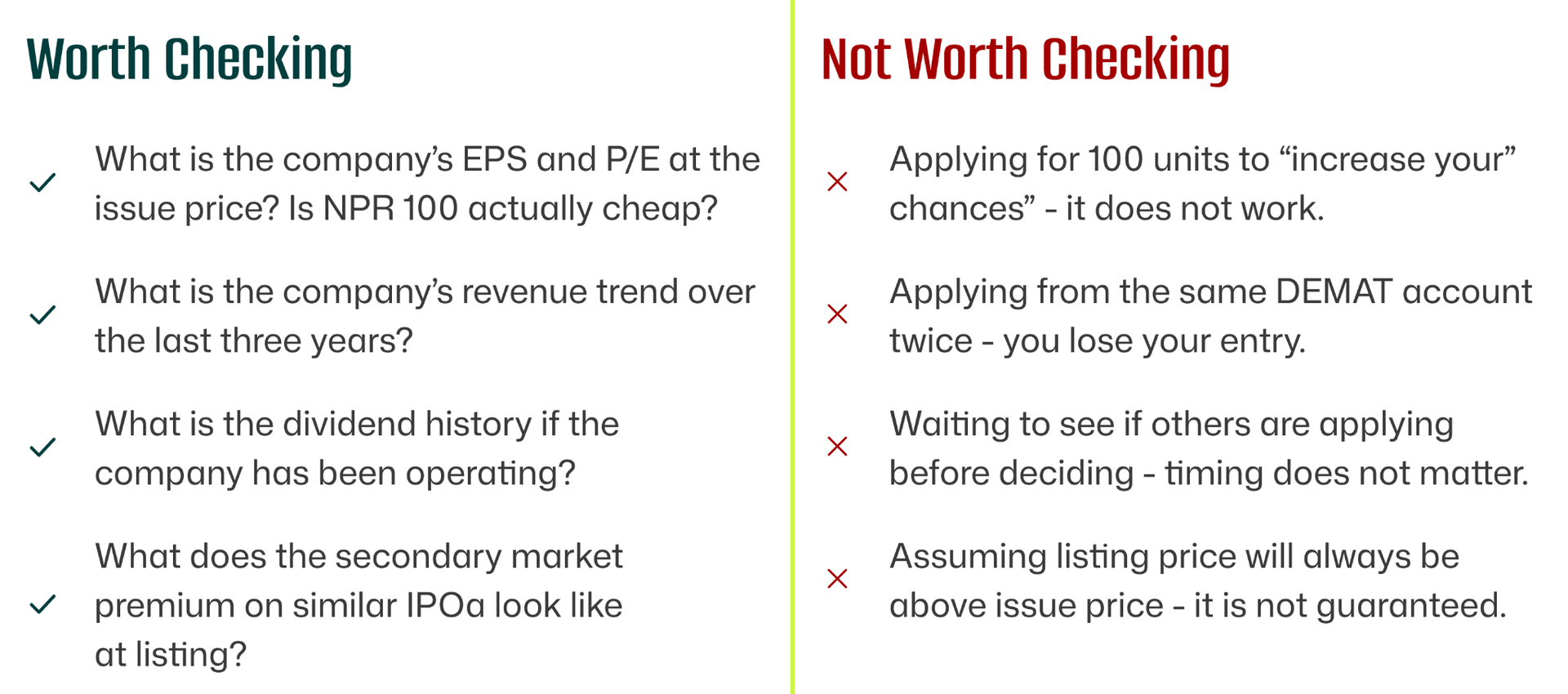
For Kalinchowk Hydropower specifically, it is a small hydropower project, 6,84,750 units at Rs 100. The fundamental question worth asking is what the projected EPS looks like once the plant is operational and whether the IPO price reflects that fairly. The analysis is a separate piece. This one was just about how the draw works.
The short version
You apply. Your money is blocked, not spent. CDSC counts all valid applications. If more people apply than shares exist, a computerised random draw picks winners. Winners get exactly 10 mins regardless of how many they applied for. Losers get their money back. The only way to improve your household’s odds is to have more independent DEMAT accounts, each applying separately for 10 units.

Kalinchowk Hydropower was open until Chaitra 25, 2082. Sopan Pharmaceutials follows up on Baisakh 2.
Apply if the fundamentals make sense. Apply with a minimum of units. Apply from every eligible account in your household. Then wait for the draw.