176.1 MW of Hydropower Generation Uncertain After Trishuli 3B Hub Damage
Electricity generation from 176.1 MW of hydropower projects in the Trishuli Corridor remains uncertain after floods damaged the Trishuli 3B Hub with NEA planning an alternative transmission route.
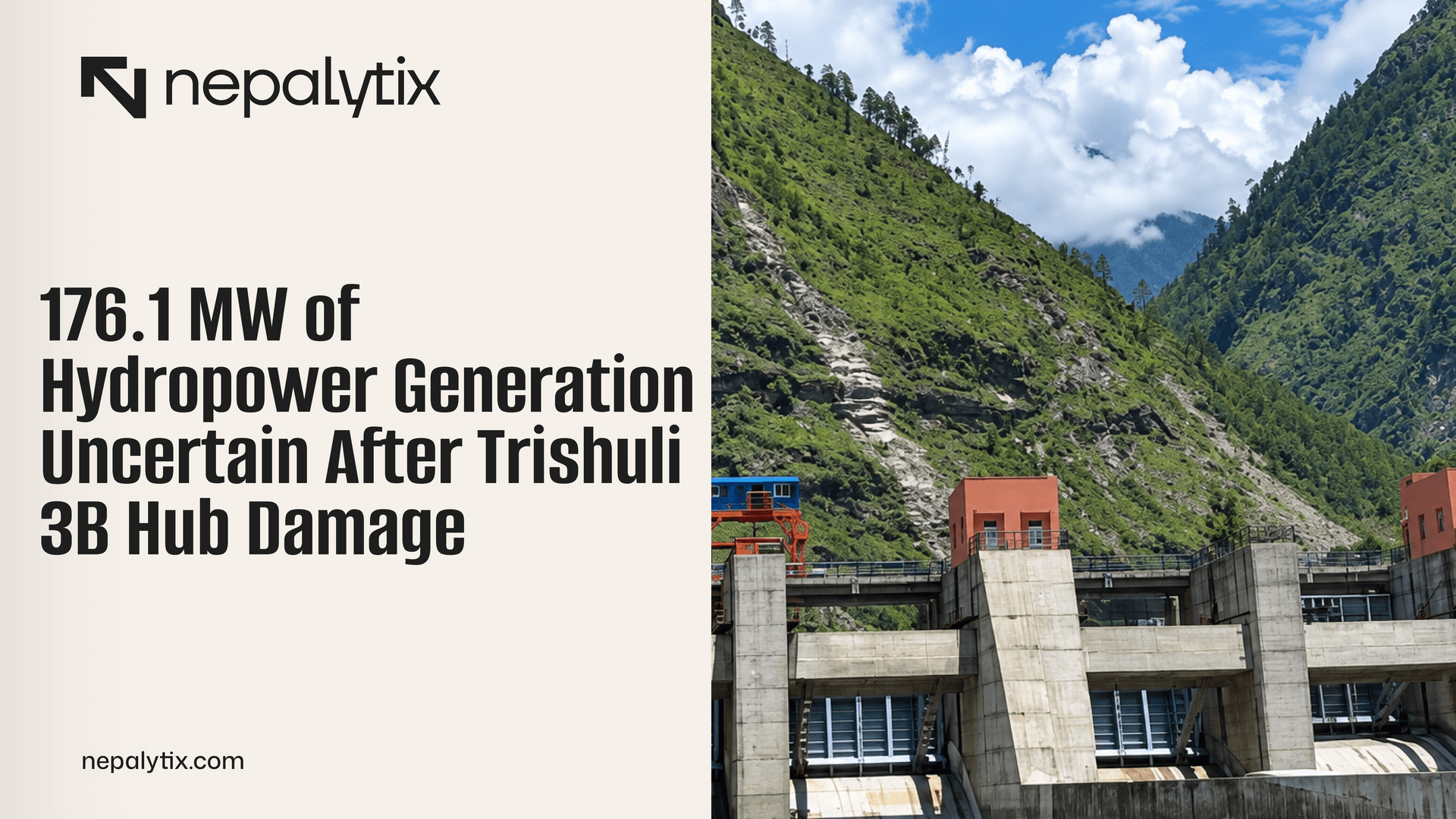
Electricity generation from 176.1 MW of hydropower projects in the Trishuli Corridor has become uncertain after floods completely damaged the 220 kV Trishuli 3B Hub Substation in Nuwakot.
Although several hydropower projects connected to the hub were not directly damaged by the Bhotekoshi floods, they have been unable to transmit electricity to the national grid due to damage to the transmission infrastructure.
The affected projects include the 78 MW Salasungi (Sanjen), 14.8 MW Upper Sanjen, 42.5 MW Sanjen, 14.8 MW Upper Mailung and 5 MW Mailung Khola projects, with a combined capacity of 155.1 MW.
Another 21 MW of generation from three hydropower projects in Tadi Khola, Nuwakot, has also been halted. These projects were connected to the national transmission system through the 132 kV Samudratar–Trishuli 3B line.
The Buddhabhumi Hydropower Project is currently generating only around 2 MW through the Samudratar Substation to supply electricity locally in the affected area.
Before the floods, electricity from projects connected to the Chilime Hub was transmitted through the Trishuli-Chilime 220 kV transmission line to the Trishuli 3B Hub and then onward to the national grid through the Trishuli-Kathmandu transmission line.
The floods have disrupted this transmission route. Overall, generation from 256 MW of operational hydropower projects has been affected, while 176.1 MW cannot currently be evacuated to the national transmission system.
The disruption has also created challenges for managing electricity demand in the Kathmandu Valley, particularly during the dry season when hydropower generation is lower.
According to Nepal Electricity Authority (NEA) Acting Executive Director Dirghayu Kumar Shrestha, the authority is working to reconnect undamaged projects to the national grid as soon as possible and aims to establish an alternative arrangement within six months.
NEA Engineering Company is studying the feasibility of constructing an alternative transmission route directly connecting the 220 kV Chilime Hub Substation to the 220 kV Matatirtha Substation, bypassing the damaged Trishuli 3B Hub.
If implemented, the arrangement would allow electricity from the affected projects to reach the national grid through Chilime and Matatirtha without relying on the damaged hub.
NEA Engineering Company CEO Chirantan Rana said the initial assessment found damage to 22 towers on the 220 kV Trishuli 3B–Matatirtha section. Meanwhile, 15 towers on the 132 kV Samudratar–Trishuli 3B line, 24 towers on the 66 kV Chilime–Trishuli line and four towers on the 66 kV Trishuli–Balaju line were also reported damaged.
NEA is also considering operating the Trishuli-Kathmandu 220 kV double-circuit transmission line with one circuit at 220 kV and the other at 132 kV, as part of the alternative arrangement.
A detailed study is still underway because some damaged transmission infrastructure is located in areas without road access. NEA plans to begin construction of the alternative route after receiving the engineering assessment.