ADB Cuts Nepal’s Growth Forecast to 4.1% After Bhotekoshi Floods
The Asian Development Bank has lowered Nepal’s FY2026/27 growth forecast to 4.1% from 4.5% after the Bhotekoshi floods damaged hydropower, transport and other infrastructure while raising its inflation forecast to 5.3%.
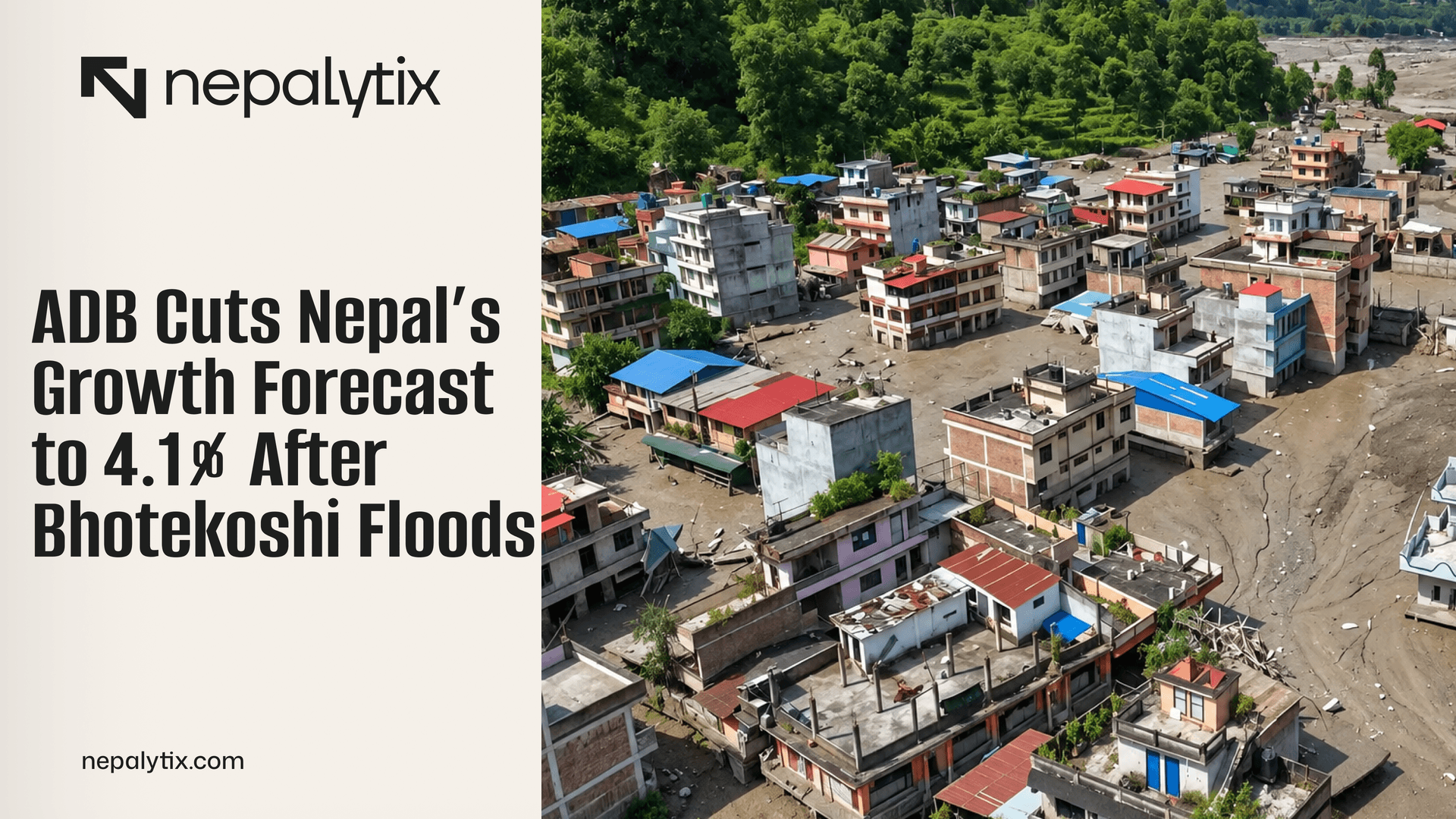
The Asian Development Bank (ADB) has lowered Nepal’s economic growth forecast for FY2026/27 to 4.1% from its earlier estimate of 4.5%, citing the economic impact of the Bhotekoshi floods and subsequent damage to infrastructure, hydropower and productive activities.
The revised forecast, published in the ADB’s Asian Development Outlook—September 2026, reflects expected disruptions to transport, hydropower, trade, tourism, agriculture and local economic activity. The damage is expected to weigh particularly on industrial and services-sector growth in the first quarter of the fiscal year.
The floods damaged hydropower plants, roads, buildings and other infrastructure across the affected areas. More than 430 MW of electricity generation capacity was reportedly knocked out of the national grid, while damage to hydropower infrastructure is expected to limit Nepal’s electricity export potential during the current fiscal year.
At the same time, reconstruction and rehabilitation spending could support economic activity by increasing demand for construction materials, transport and labor. The government has estimated that around Rs. 723.31 billion will be required to rebuild flood-damaged infrastructure. However, the ADB expects the additional spending to put pressure on public finances.
Inflation Forecast Raised to 5.3%
The ADB has raised Nepal’s inflation forecast for the current fiscal year to 5.3%. Flood-related supply disruptions and higher transportation costs are expected to put upward pressure on prices, while reconstruction is likely to increase demand for construction materials, labor and transport services.
The ADB also noted that higher global fuel prices could add further inflationary pressure, particularly if geopolitical tensions in West Asia push energy prices higher.
Fiscal Deficit Expected to Widen
Nepal’s budget deficit is projected to increase to 4.7% of GDP in FY2026/27, compared with the ADB’s pre-disaster projection of 3.4%. The increase is linked primarily to additional reconstruction and rehabilitation spending.
Public debt was estimated at 44.9% of GDP in the previous fiscal year, up from 43.7% a year earlier. Although debt-servicing costs declined as a share of GDP, the ADB expects public debt to rise further as the government mobilizes additional resources for reconstruction. Nepal nevertheless remains at low risk of debt distress, according to the ADB.
External Sector Remains Strong
Nepal’s external position strengthened significantly in FY2025/26, supported by strong remittance inflows and export growth. The current account surplus reached 14% of GDP, while the overall balance-of-payments surplus reached 15.6%.
Foreign exchange reserves have also risen to a record level, providing coverage for more than 19 months of imports of goods and services. Remittance inflows are expected to remain strong, although tourism revenue could face temporary pressure because of flood-damaged roads and infrastructure.
The ADB expects tourism to recover gradually, which could support the services sector and external balance.
The outlook therefore presents a mixed picture: reconstruction could generate additional economic activity, but the immediate destruction of productive infrastructure, weaker electricity exports, higher inflation and increased fiscal spending are expected to weigh on growth during the current fiscal year.