At Least Rs30 Billion Needed to Rebuild Flood-Damaged Roads and Bridges
The Department of Roads estimates at least Rs30 billion will be needed to reconstruct roads and bridges damaged by the Bhotekoshi flood, with 32 bridges completely destroyed between Rasuwa and Dhading.
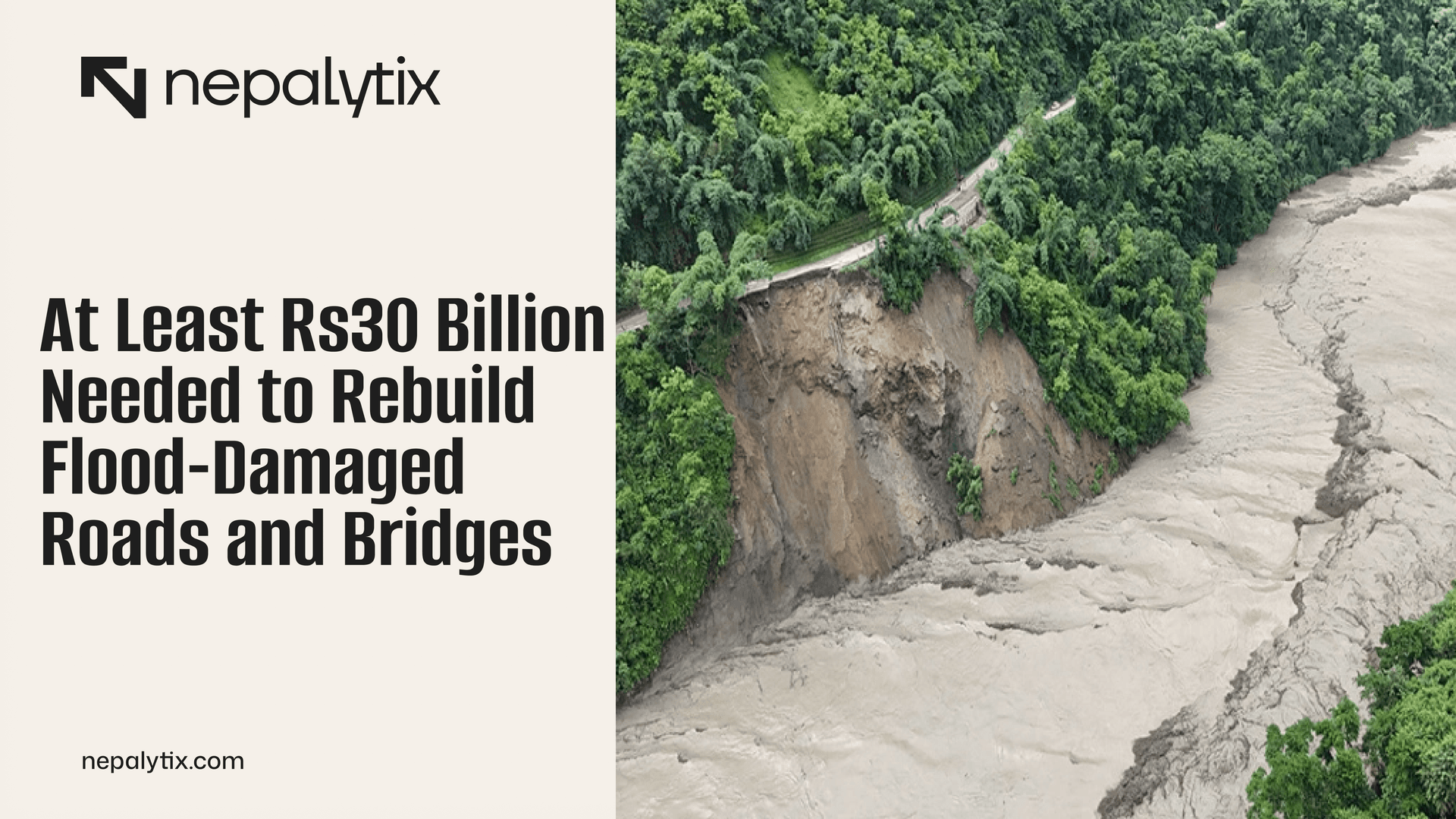
The Department of Roads has estimated that at least Rs30 billion will be required to reconstruct and repair roads and bridges damaged by the recent Bhotekoshi flood, highlighting the scale of infrastructure damage caused by the disaster.
According to Department of Roads Director General Dr. Bijay Jaisi, a detailed assessment of the damage has already begun and the reconstruction process is underway.
The flood caused extensive damage to bridges along the Rasuwa-Dhading corridor. Of the 41 bridges between the Miteri Bridge in Rasuwa and Malekhu in Dhading, 35 were damaged. Among them, 32 bridges were completely destroyed and three suffered partial damage, while only six bridges remained intact.
The flood also destroyed approximately 40 kilometres of road, while another 10 kilometres sustained partial damage. The Miteri Bridge at Timure, two Bailey bridges and bridges associated with hydropower projects were also swept away by the flood.
To accelerate restoration of the affected road network, the Galchhi-Trishuli-Mailung-Rasuwagadhi Road Project has already invited bids for the repair and reconstruction of the road section between Betrabati and Timure.
The contracted works will include activities such as constructing retaining walls, excavating damaged road sections and clearing landslides, among other restoration work.
Krishnabhir Road Remains Blocked
Meanwhile, a major landslide at Krishnabhir along the Nagdhunga-Muglin road has created another serious transportation challenge for Kathmandu and surrounding districts.
The section has remained completely blocked since Sunday, with the landslide making even pedestrian movement impossible. Part of the road has also subsided, while continued rockfall from above and erosion by the river below have prevented engineers from conducting a full on-site assessment.
The Department of Roads has deployed a team to assess the situation and is using drones to survey the active landslide. Officials are expected to determine the next course of action after receiving the assessment report.
Department officials said it is still unclear how the road can be reopened because the landslide remains active. Under normal circumstances, such roads can be restored by cutting into the hillside or constructing retaining walls and piles, but the scale and instability of the Krishnabhir landslide have made the situation more complicated.
Senior Divisional Engineer Suresh Paudel of the Nagdhunga-Muglin Road Project said reopening the road could take five to six months under the current conditions. He said vehicle movement before Dashain could be difficult because of the scale of the landslide.
Alternative Route Being Developed
As a temporary solution, the Department of Roads is working on an alternative route along the opposite bank of the Trishuli River to bypass the damaged Malekhu-Muglin section.
The proposed route will cross the river near Fishing, continue towards Benighat along the opposite bank and then reconnect with the original side of the river. The Fishing-to-Benighat section will be around 20 kilometres, with approximately two kilometres of track still needing to be opened.
The widespread infrastructure damage comes as Nepal faces the economic and logistical consequences of the floods, with damaged highways and bridges disrupting the movement of people and goods.
The reconstruction bill of at least Rs30 billion also underscores the substantial public investment that will be required to restore critical transport infrastructure and reconnect communities affected by the disaster.