Balen Proposed Replacing Finance Minister with Ravi, Raising Questions Over Government Stability and Internal Rift
Prime Minister Balen Shah and Rastriya Swatantra Party (RSP) President Rabi Lamichhane held a four-hour discussion focusing on government performance, rising criticism, party-government coordination, and Finance Minister Dr. Swarnim Wagle’s role.
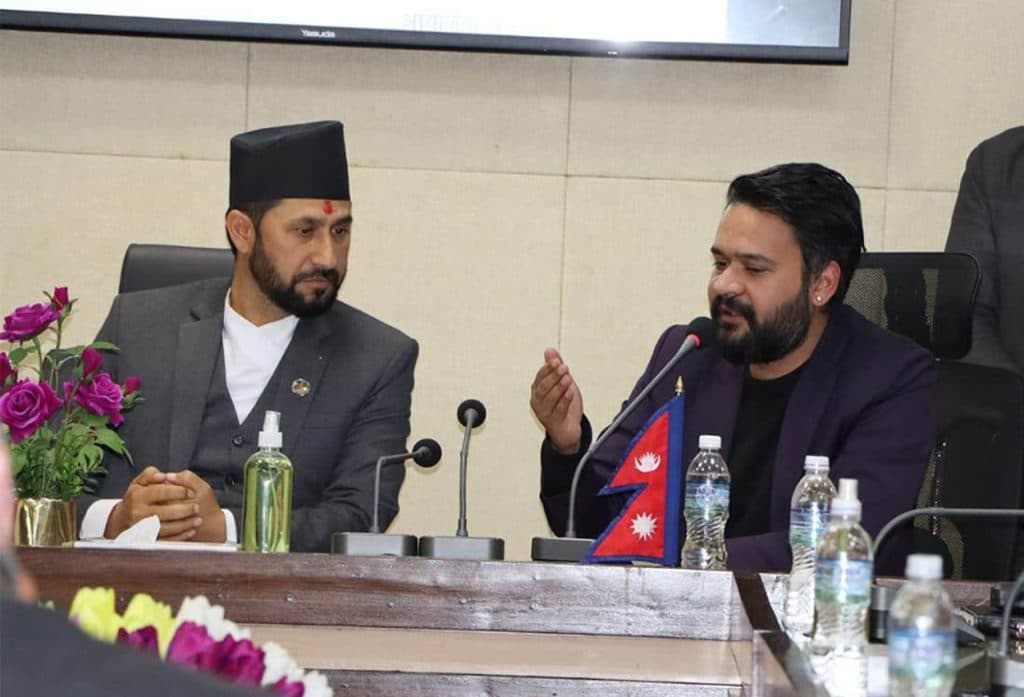
Prime Minister Balen Shah and Rastriya Swatantra Party (RSP) President Rabi Lamichhane reportedly held a four-hour one-on-one meeting on Sunday, with discussions centered on the government’s working style, growing public criticism, party-government relations, and the role of Finance Minister Dr. Swarnim Wagle.
According to sources close to Lamichhane, the meeting went beyond a routine political discussion. The two leaders reportedly discussed weaknesses seen during the first 100 days of the government, increasing dissatisfaction among citizens, and internal disagreements within the government.
Questions Over Government Performance and Public Dissatisfaction
Sources said Lamichhane raised concerns regarding increasing criticism of the government, public dissatisfaction, the government’s response to sensitive issues, and delays in decision-making processes.
The leaders also reportedly discussed issues related to geopolitical concerns following controversies surrounding an event linked to the Dalai Lama’s birthday, emphasizing the need for careful decisions considering Nepal’s sensitive geopolitical position.
Other issues reportedly discussed included delays in party responsibility allocation, unresolved internal appointments, and the government’s slow progress in addressing the landless squatters’ issue.
Finance Minister Swarnim Wagle at the Center of Discussion
A major part of the four-hour conversation reportedly focused on differences between Prime Minister Shah and Finance Minister Dr. Swarnim Wagle.
Sources claim Lamichhane presented concerns raised by Wagle, including the prime minister holding direct meetings with private sector representatives without sufficient coordination with the Finance Ministry, perceived interference from the Prime Minister’s Office in economic matters, and lack of consultation on important financial decisions.
Lamichhane reportedly questioned why regular communication between the prime minister and finance minister had weakened and why two separate centers of influence appeared to be emerging in economic policy decisions.
Balen’s Proposal to Change Finance Minister
According to sources, Prime Minister Shah expressed dissatisfaction with Wagle’s working style.
Shah reportedly raised concerns over the finance minister’s approach during budget preparation and tax-related decisions, claiming that some decisions may have benefited specific interest groups. However, these claims have not been independently verified, and neither the prime minister nor his secretariat has issued an official statement.
Sources further claim that Shah proposed removing Dr. Wagle from the finance ministry and assigning the responsibility to another leader while allowing Wagle to focus on party responsibilities.
Ravi’s Concern Over Immediate Change
Lamichhane reportedly opposed an immediate removal of Wagle, arguing that such a move could create a negative public perception and disturb the balance of power within the RSP.
Since Wagle is considered an influential leader within the party besides being finance minister, Lamichhane reportedly viewed the decision as more than a simple cabinet reshuffle.
He reportedly warned that changing the finance minister could raise questions over economic policy stability, create uncertainty among private-sector investors and development partners, and trigger internal political tensions within the party.
Growing Concerns After PM’s Private Sector Meetings
Prime Minister Shah’s recent separate meetings with private-sector representatives and construction entrepreneurs have also increased speculation about growing differences.
Although economic issues such as investment, taxation, construction payments, and business confidence are closely linked with the Finance Ministry, the absence of the finance minister from such discussions has raised questions within the party.
Wagle’s supporters reportedly believe technical issues during budget preparation are being turned into political disputes, while some officials close to the prime minister reportedly believe Wagle has not maintained sufficient coordination with the Prime Minister’s Office.
Policy Conflict or Personal Disagreement?
The reported differences between Shah and Wagle appear to reflect a broader debate over government management rather than only a personal disagreement.
Prime Minister Shah reportedly prefers stronger direct leadership from the Prime Minister’s Office, while Finance Minister Wagle emphasizes institutional authority, technical independence, and ministry-level decision-making processes.
This difference in governing approach has created tension between centralized leadership and ministerial autonomy.
Risk of Multiple Power Centers
The current RSP-led government structure includes Balen Shah as the executive head, Rabi Lamichhane as the party’s main political figure, and Swarnim Wagle as an influential policy leader.
Political observers believe maintaining balance among these three centers will be crucial for government stability.
If Wagle is replaced, it could strengthen the prime minister’s control over the government but may also create concerns about centralized decision-making within the party.
If Wagle remains but differences continue, there is a risk of parallel decision-making centers emerging, which could affect budget implementation, private-sector confidence, administration, and investment climate.
The discussion between Balen and Ravi therefore appears to be more than a debate over one minister’s position. It may represent an attempt to redefine the balance of power between the party and government.