Bank CEOs Can Become NRB Governor After 2 Years
Commercial bank CEOs could become eligible for the Nepal Rastra Bank governor position after a mandatory two-year cooling-off period under proposed amendments to the NRB Act.
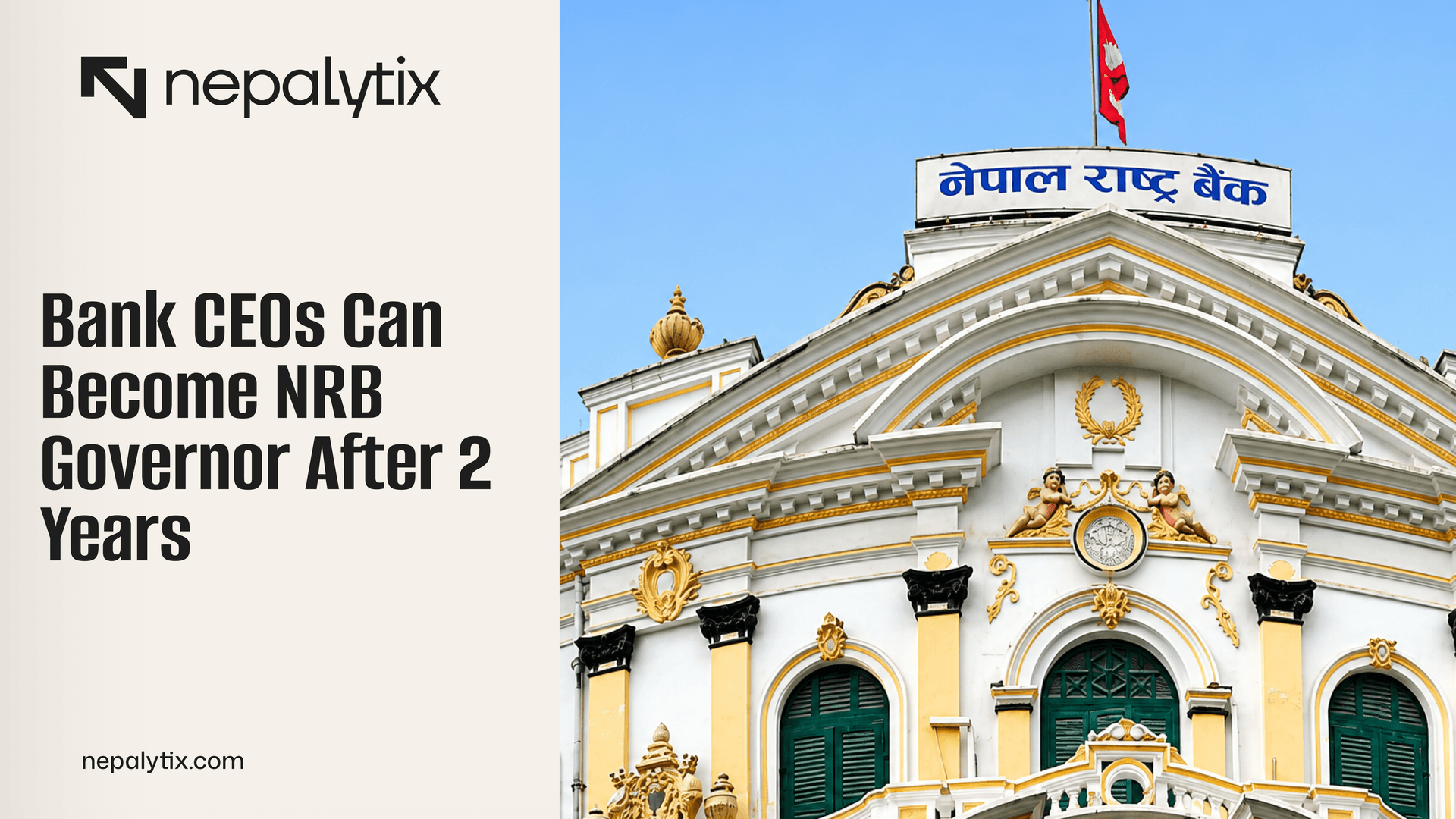
Chief executive officers (CEOs) of commercial banks in Nepal could now become eligible to serve as the Governor of Nepal Rastra Bank (NRB), provided they complete a mandatory two-year waiting period after leaving their banking positions.
The provision has been proposed by the Finance Committee of the House of Representatives while reviewing amendments to the Nepal Rastra Bank Act. The proposed change would expand the pool of professionals who can be considered for the country's central bank governor position.
Under the proposed provision, former CEOs of commercial banks and individuals with executive-level experience in financial institutions could be considered for appointment as NRB governor. However, they would have to complete a two-year gap after stepping down from their executive positions before becoming eligible.
The proposed cooling-off period is intended to create a separation between senior executives of financial institutions and the central bank's top regulatory position. The NRB governor plays a key role in regulating banks and financial institutions, setting monetary policy and overseeing the country's financial system.
The proposed amendment also sets educational and professional experience requirements for candidates. An eligible candidate would need to hold at least a master's degree and have a minimum of 10 years of relevant professional experience.
The change could significantly widen the range of candidates considered for the NRB governor's position. At present, senior officials from the central bank, government, academia and financial sectors are among the potential sources of candidates for the role.
Allowing former commercial bank CEOs to qualify after a cooling-off period could bring more private-sector banking and management experience into consideration when selecting the central bank's leadership.
At the same time, the two-year waiting requirement provides a period between a candidate's departure from a commercial bank and potential appointment as governor. This could help address concerns about conflicts of interest, particularly because the NRB directly regulates commercial banks and financial institutions.
The proposed provision is part of the broader process of amending the Nepal Rastra Bank Act. The Finance Committee is reviewing different provisions before the proposed changes move through the remaining legislative process.
If approved, the amendment would create a clearer pathway for experienced banking executives to eventually compete for one of Nepal's most important economic policy positions, while retaining a mandatory cooling-off period between their commercial banking roles and central bank leadership.