Bhotekoshi Floods Halt Nepal’s Bangladesh Power Exports
Flood damage to the Chilime and Trishuli hydropower projects has halted Nepal’s electricity exports to Bangladesh while India’s delayed export approvals are keeping another 73.75 MW off the market.
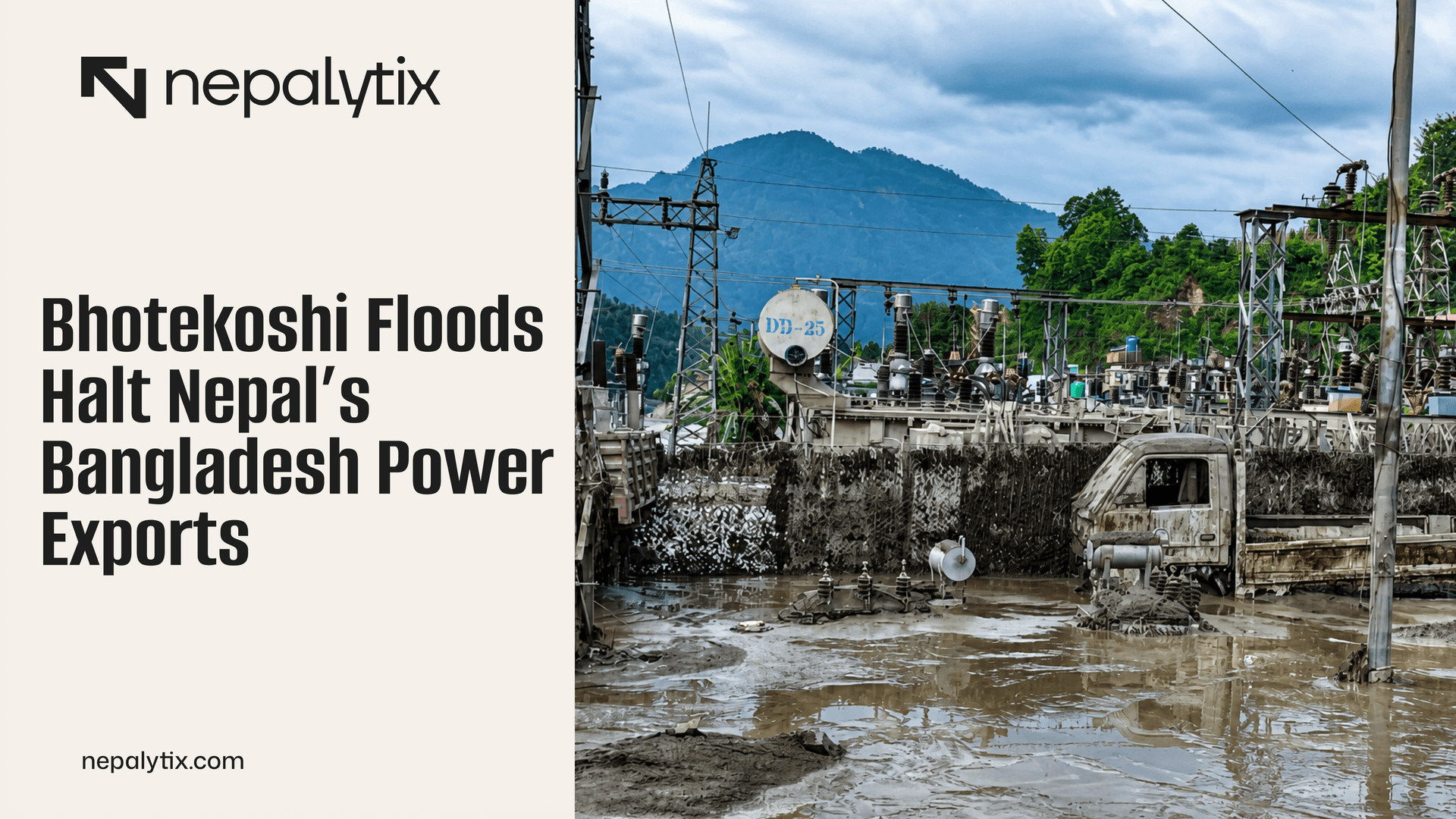
Nepal’s electricity exports have fallen sharply after floods in the Bhotekoshi River forced the shutdown of 12 hydropower projects, disrupting exports to Bangladesh and limiting the country’s ability to sell surplus power during the monsoon season.
Nepal’s average electricity exports, which had reached around 1,000 MW have now dropped to approximately 650 MW following flood-related damage.
The impact is particularly significant for exports to Bangladesh. The 22.1 MW Chilime and 24 MW Trishuli hydropower projects both approved for electricity exports to Bangladesh were damaged by the floods. Generation from both projects has remained halted for around a week.
Chilime and Trishuli had received approval to export 21.4 MW and 18.6 MW, respectively, to India, with the same projects also cleared for electricity sales to Bangladesh. Bangladesh purchases the electricity in US dollars, making the exports an important source of foreign-currency revenue for Nepal.
The floods have also disrupted other hydropower projects. 12 projects have suspended generation, while the Sanjen, Upper Sanjen and Salasungi projects are currently operating in isolated mode after damage to transmission infrastructure. These plants are supplying electricity only according to local demand rather than feeding power into the national grid.
At the same time, Nepal is losing additional export capacity because India has not renewed export approvals for three hydropower projects.
The export permit for 38.80 MW from the Upper Chameliya Hydropower Project expired on June 31, while permits for 24.25 MW from the Seti River Project and 10.70 MW from the Upper Tadi River Project expired on July 31.
As a result, Nepal currently cannot export 73.75 MW of electricity from these three projects to India.
India’s Central Electricity Authority (CEA) is responsible for approving electricity exports and imports involving the Indian market. Nepal needs these approvals to be granted or renewed before electricity from individual projects can be exported.
The Nepal Electricity Authority (NEA) has also asked India to approve alternative hydropower projects for electricity exports to Bangladesh, after the two projects previously approved for Bangladesh were damaged by the floods.
An additional 20 MW of exports to Bangladesh also remains pending due to the absence of approval from India’s CEA. Nepal and Bangladesh had agreed to increase exports under their existing 40 MW arrangement, but India has cited transmission capacity constraints in declining the additional export.
Nepal currently has approval for 37 hydropower projects with a combined export capacity of around 1,200 MW. The country sells surplus electricity to India through the Indian Energy Exchange’s Day-Ahead Market and Real-Time Market, as well as through bilateral power-sale agreements.
However, expanding electricity exports remains complicated by India’s restrictions concerning Chinese investment, contractors and equipment. Nepal has sought approval to export electricity from projects including Upper Tamakoshi, but India has not approved exports from some projects with Chinese involvement.
The issue has become increasingly important as Nepal seeks to turn its growing hydropower capacity into a reliable export business. Stakeholders have called for stronger diplomatic negotiations with India to secure both new approvals and annual renewals.
Despite the current disruptions, Nepal’s electricity trade has become increasingly profitable. In FY2082/83, Nepal exported electricity worth approximately NPR 29.32 billion to India and Bangladesh while importing around NPR 10.23 billion of electricity from India during the dry season.
This resulted in an estimated net electricity trade surplus of around NPR 19.97 billion in a single year.
The Bhotekoshi floods therefore create a double setback: physical damage is reducing the electricity Nepal can generate and export, while unresolved cross-border approval issues are preventing additional available capacity from reaching foreign markets. Restoring damaged projects and securing timely export approvals will be critical if Nepal is to continue scaling electricity exports and converting its hydropower potential into foreign-currency earnings.