Digital Payments Transform Relief Collection
Digital payments have enabled billions of rupees to flow directly into Nepal’s government relief fund through QR codes, mobile banking and international cards while highlighting gaps in coordinated digital disaster infrastructure.
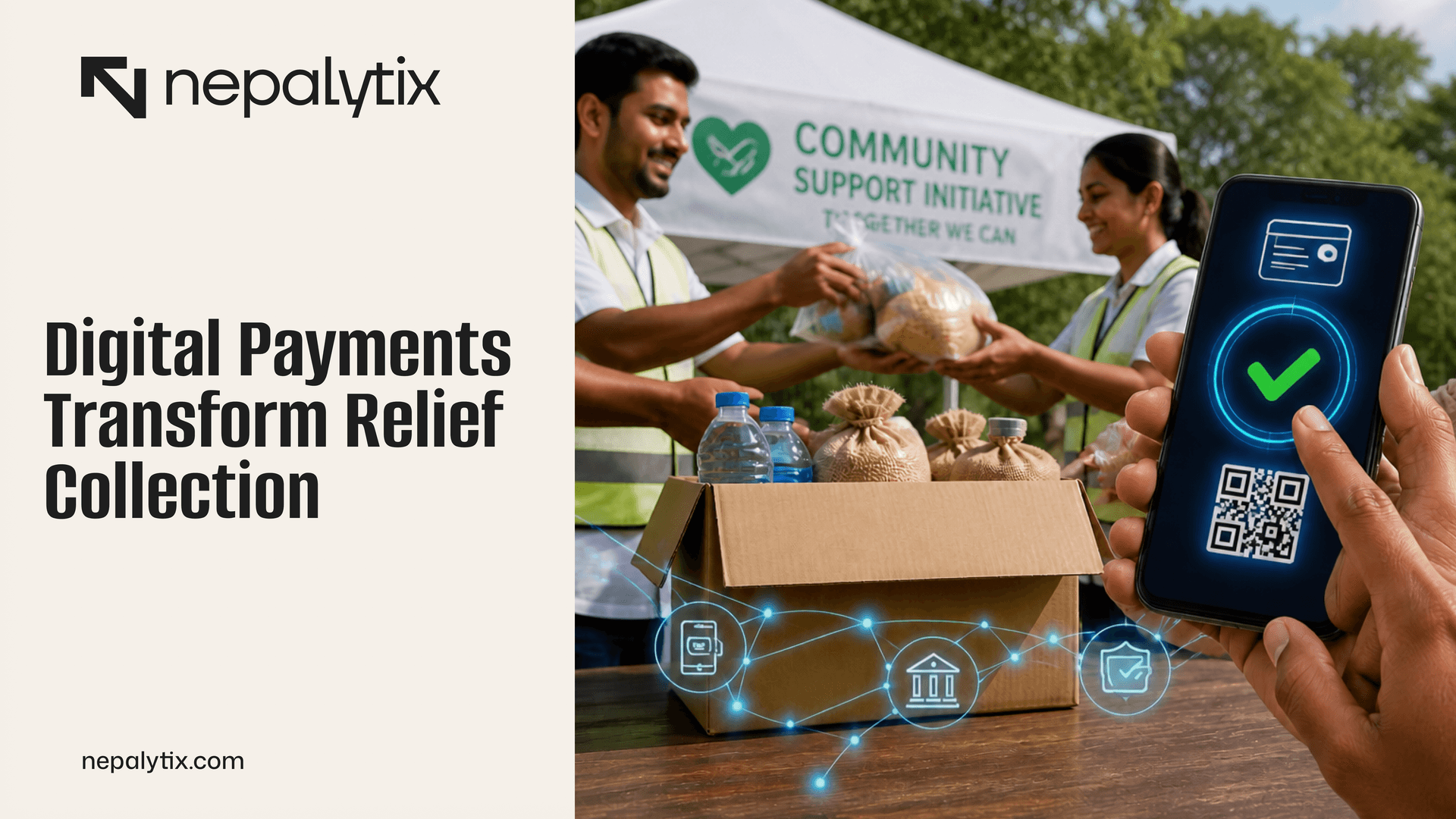
Digital payments have significantly changed how disaster relief is collected in Nepal, allowing individuals and international donors to transfer money directly to the government’s relief fund through QR codes, mobile banking, digital wallets and international cards.
The shift has become particularly visible following the Bhotekoshi floods, with contributions from students, housewives, small businesses and international donors reaching the government fund through digital channels within a short period.
One example is musician Bobby Lama, who previously avoided depositing cash into the government treasury because of the inconvenience of visiting banks. During the latest disaster, however, he transferred money directly to the Prime Minister’s Disaster Relief Fund through mobile banking by scanning its QR code.
After initially depositing Rs. 5,000, Lama contributed an additional Rs. 150,000 after consulting with his band members. He said the availability of QR payments had made relief collection easier and more transparent.
The scale of digital contributions has been significant. Within 11 days of the Bhotekoshi floods, more than Rs. 10 billion had reportedly been collected in the relief fund, with contributions coming from both domestic and international donors.
The campaign has also demonstrated how Nepal’s digital payment infrastructure can bring small individual contributions into a centralized government fund. Following the removal of transaction limits for relief-related deposits by Nepal Rastra Bank, even small-value contributions could be transferred more easily through QR codes and digital wallets.
According to data from PhonePe, 889,145 transactions had been processed through its network, of which 815,219 were domestic internal QR transactions. These transactions contributed around Rs. 2.95 billion to the relief fund.
Similarly, Nepal Clearing House Limited (NCHL) recorded 246,614 transactions through its network as of Saturday afternoon. Of these, 112,932 transactions were made through internal QR payments, raising approximately Rs. 395.14 crore.
International payments have also become an important part of the relief campaign. Through international cards such as Visa and MasterCard, 93,850 transactions were made from abroad using the 3D Secure system, resulting in more than Rs. 1.4 billion being deposited directly into the relief fund.
Other cross-border payment channels have also contributed. As of Saturday, approximately Rs. 48.536 million had been deposited through India's UPI, while Rs. 17.972 million had been received through Alipay.
The government also enabled overseas donors to contribute directly through dollar cards, eliminating the need to visit banks or navigate traditional international bank transfers.
Payment service providers have further supported the campaign by waiving transaction fees and merchant discount rates, while the removal of transaction limits has encouraged broader participation.
The impact has not been limited to large donors. Around Rs. 110 million had been collected through government e-services from approximately 175,000 transactions, with more than half of the contribution reportedly coming from students, housewives, drivers and small business owners who contributed less than Rs. 100.
However, the rapid growth of digital relief payments has also exposed weaknesses in Nepal’s digital public infrastructure.
Technology experts have pointed to the use of multiple QR codes by different organizations and banks, creating confusion among donors. The experience has strengthened calls for a common Nepal digital stack, including e-KYC, a unified national QR system and an interoperable data exchange platform.
Experts have also argued that disaster management should make greater use of the technology sector. Technology companies had offered capabilities such as drone mapping, artificial intelligence, data analysis and disaster-management support, but a coordinated government mechanism for integrating such technical assistance was not in place.
Nepal’s ability to collect relief digitally reflects the rapid development of its payment infrastructure over the past decade. While the country has made significant progress in QR and cross-border payments, the latest disaster has also demonstrated the need to move beyond payments toward a more integrated digital disaster-response infrastructure.