Flood Hits Hydropower
Flooding along the Bhotekoshi corridor has knocked 11 hydropower projects offline, affecting around 405 MW of hydropower and 25 MW of solar capacity while damaging key transmission infrastructure.
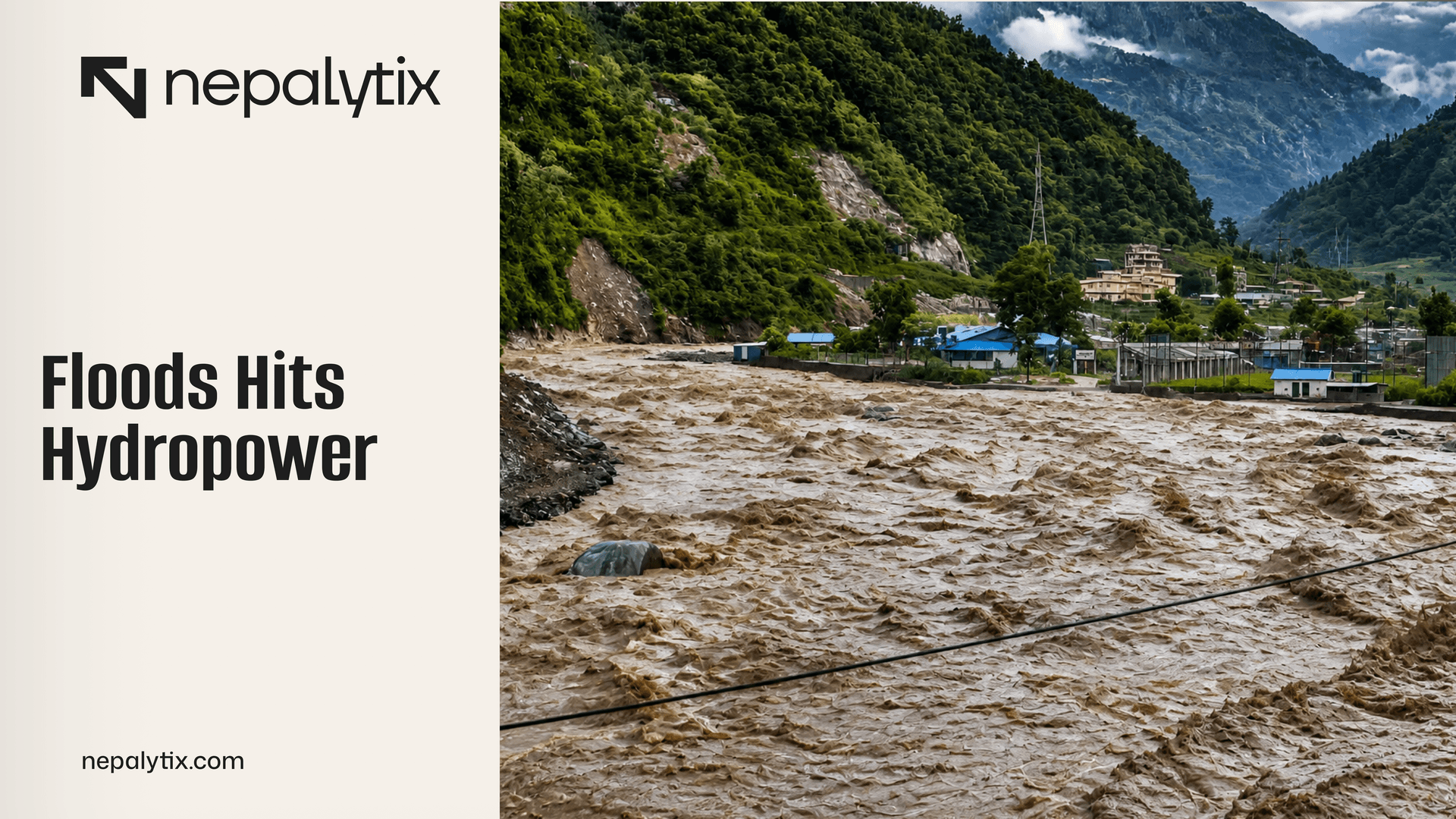
Flooding along the Bhotekoshi corridor has caused major disruption to Nepal’s electricity system, taking around 430 MW of power capacity offline.
According to preliminary estimates, the floods have affected 11 hydropower projects with a combined capacity of around 405 MW, while another 25 MW of solar power capacity has also been taken out of the system.
The disruption has affected both electricity generation and the infrastructure required to transmit power to the national grid. Several hydropower projects in the flood-affected corridor have been forced to stop operations following damage caused by the rising river and flooding.
The floods have also caused significant damage to the 220 kV Trishuli 3B hub and associated transmission infrastructure. The hub plays an important role in evacuating electricity generated by hydropower projects in the region and connecting it to the national transmission network.
Damage to transmission infrastructure has compounded the impact of the generation losses. Even where power plants remain capable of generating electricity, damage to transmission facilities can prevent the electricity from being delivered to the wider grid.
The affected projects represent a significant amount of Nepal’s installed electricity generation capacity, highlighting the scale of the disruption caused by the disaster. The Bhotekoshi corridor is home to several important hydropower projects and transmission facilities, making it strategically important to the country’s power system.
The outage comes during the monsoon season, when Nepal’s hydropower plants generally operate at higher generation levels because of increased water availability. The loss of around 405 MW of hydropower capacity therefore represents a substantial reduction in available generation from the affected region.
The damage to the Trishuli 3B hub and other transmission infrastructure could also delay the restoration of affected generation projects, as damaged evacuation lines and substations need to be repaired before electricity can be safely supplied to the grid.
Technical teams are expected to assess the condition of the affected power plants, substations and transmission lines as restoration work begins. The full extent of the damage and the time required to bring the projects back online will depend on the condition of individual facilities and access to the affected areas.
The disaster has once again highlighted the exposure of Nepal’s hydropower and transmission infrastructure to floods, landslides and other extreme weather events, particularly during the monsoon.