Floods Hit Nepal’s Supply Chain Before Festivals
Damage to the Rasuwagadhi border and Prithvi Highway has disrupted freight movement ahead of Nepal’s major festival season raising transport costs, shortage risks and pressure on prices.
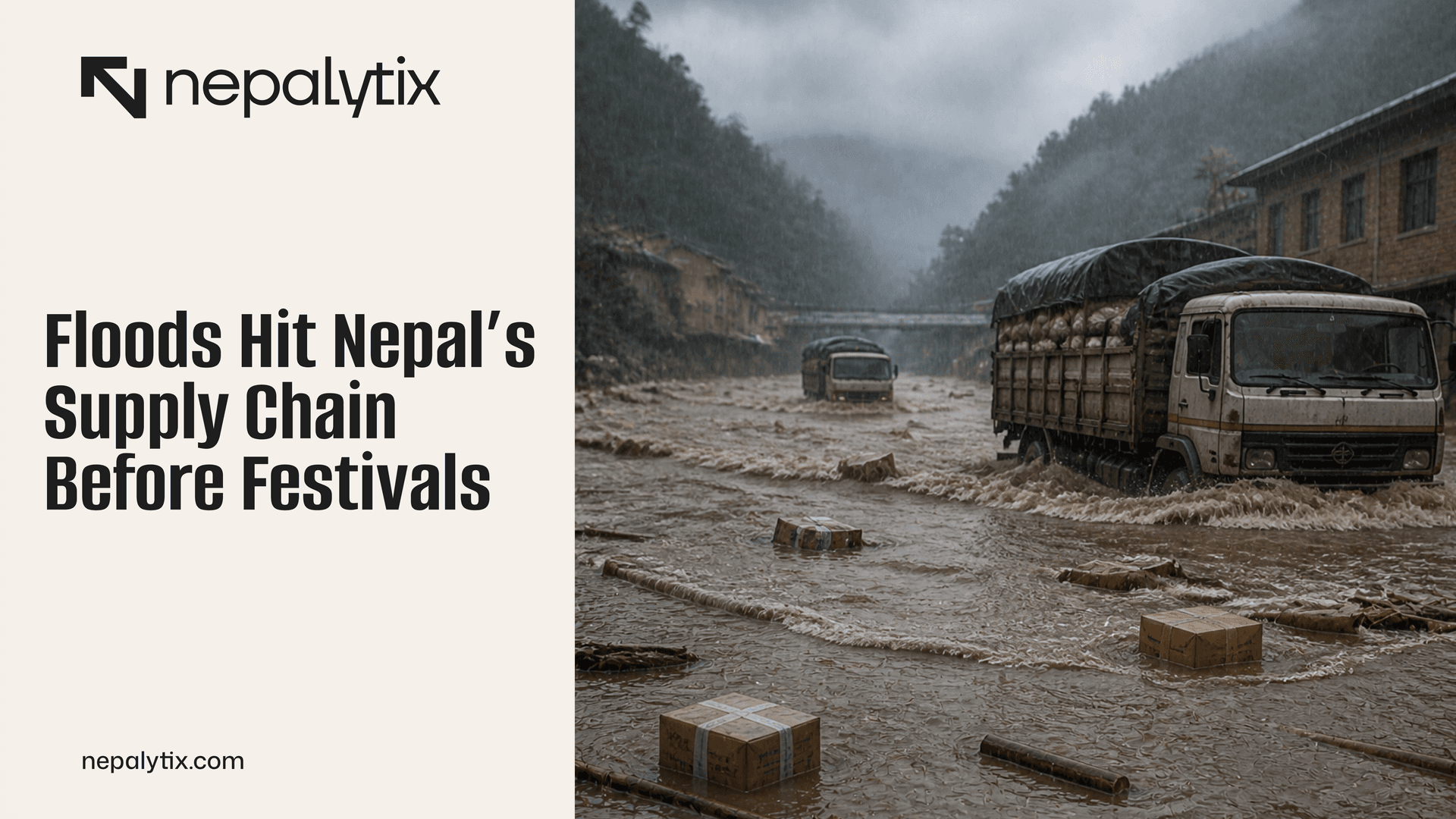
Flood damage to two of Nepal’s key trade and transport lifelines has disrupted the country’s supply chain just ahead of the major festival season, raising concerns over freight costs, inventory shortages and higher consumer prices.
The Rasuwagadhi border crossing with China remains closed following flood damage, leaving around 176 containers stranded in Kerung. With traders forced to use alternative routes, transportation costs have nearly doubled.
Freight costs that previously stood at around NPR 175,000–200,000 per container have increased to approximately NPR 300,000–400,000, putting additional pressure on the cost of imported goods.
The disruption is particularly concerning for Kathmandu’s LPG supply. The capital consumes around 35,000 to 37,000 cooking gas cylinders every day, and supplies now have to move through longer and more expensive alternative routes. Any prolonged disruption could increase the risk of LPG shortages and price increases during the festival period.
The road network connecting northern Nepal to the capital has also suffered extensive damage. Floods in the Bhotekoshi and Trishuli rivers have severely damaged roads along the route connecting Bidur to Rasuwagadhi.
Around 40 km of the 56 km stretch from Bidur to Rasuwagadhi, passing through Betrawati, Mailung and Syabrubesi, has reportedly been completely destroyed.
The disruption is already affecting the movement of goods into Kathmandu. Transporting goods through the Korala border can take around 6 to 10 days, while shipments arriving through sea routes can take 55 to 65 days. Longer transit times could make it difficult for traders to replenish inventories in time for the festival shopping season.
Traders are also facing direct losses from the floods. Preliminary estimates put the value of damaged goods at more than NPR 2 billion.
The Nepal Trans-Himalayan Border Commerce Association has warned that the supply disruption could push prices of festival-related goods up by 10% to 20%, particularly if alternative transport routes remain constrained.
The Prithvi Highway, another critical artery connecting Kathmandu with major commercial centres, has also been affected by landslides and road obstructions. Problems around areas such as Krishnabhir have forced freight traffic to use alternative routes including the Tribhuvan Highway and Kanti Lokpath.
As a result, journeys that would normally take around three hours can now take close to five hours, increasing both fuel consumption and transportation costs.
The disruption is also creating a fiscal impact. The Rasuwa Customs Office collected around NPR 13.64 billion in revenue in the last fiscal year, but the prolonged closure of the border is now threatening to delay customs collections and put pressure on revenue targets.
The timing makes the disruption particularly important. Nepal is entering its major festival season, when demand for food, clothing, electronics, vehicles, household goods and other imported products typically rises sharply.
If the northern border and major road corridors are not restored quickly, the impact could move beyond logistics into consumer inflation, inventory shortages, higher business costs and weaker customs revenue.
The immediate priority is therefore not only restoring physical infrastructure but also creating reliable alternative trade corridors. For a country heavily dependent on imported goods, the floods have once again exposed how vulnerable Nepal’s supply chain remains when a small number of major transport routes are disrupted.