Government Begins Legal Process for 2% Hydropower IPO Quota for Security Personnel
The government has begun the legal process to reserve 2% of hydropower IPOs for serving security personnel while also announcing relief measures for flood-affected NEA employees and electricity consumers.
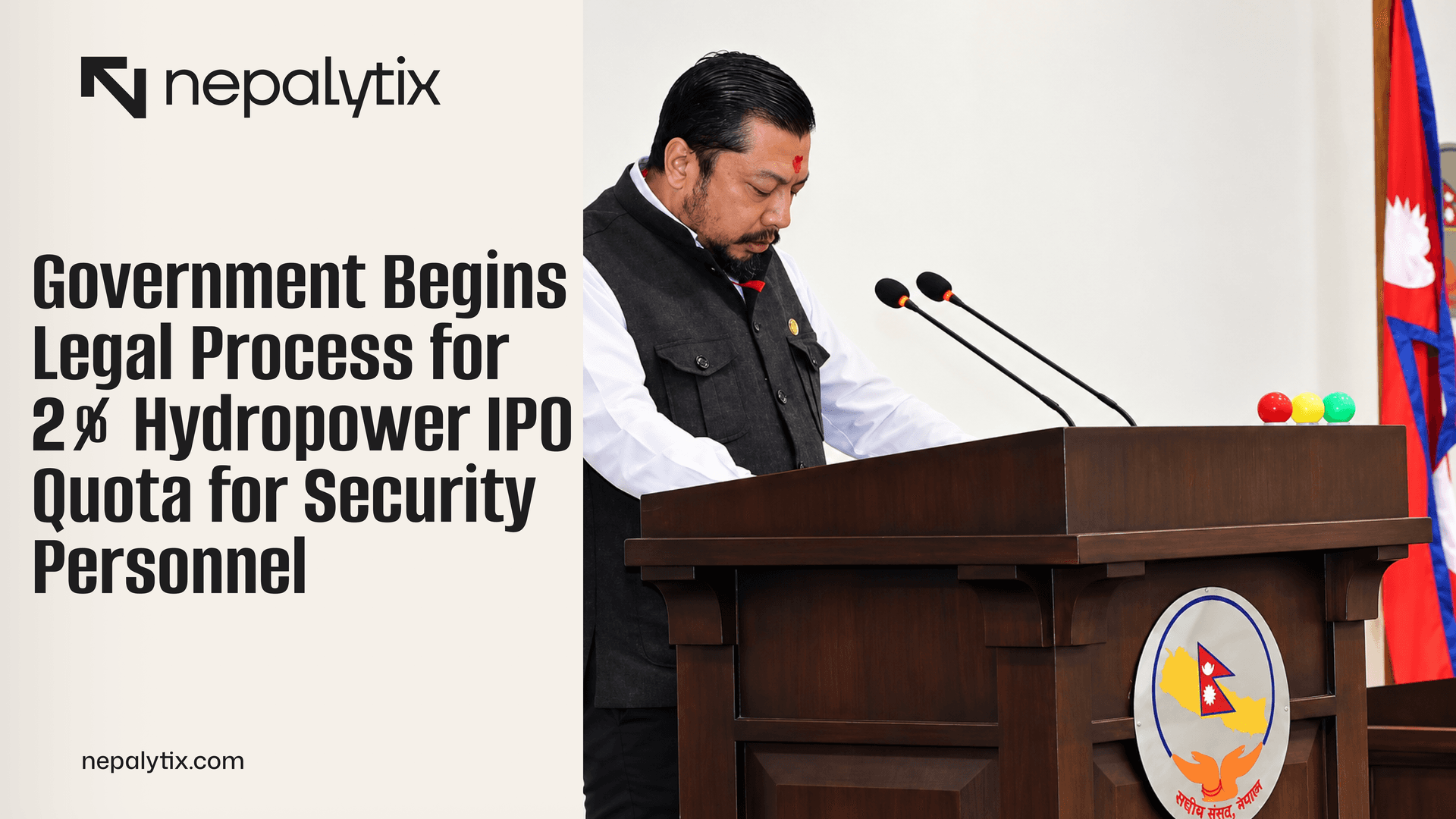
The government has initiated the legal process to provide serving security personnel with a 2% participation in the initial public offerings (IPOs) of hydropower projects.
Speaking at the House of Representatives on Wednesday, Energy, Water Resources and Irrigation Minister Biraj Bhakta Shrestha said the provision is being developed in recognition of the role of security personnel in search, rescue and rehabilitation operations during the devastating Bhotekoshi-Trishuli floods.
The proposed arrangement would provide serving personnel from Nepal’s security agencies with access to a portion of primary shares issued by hydropower project developers. Ministry officials said the necessary legal procedures are being advanced to establish the 2% provision.
The minister also announced immediate relief for dependent families of Nepal Electricity Authority employees who died or went missing while on duty during the disaster. The families will receive Rs. 500,000 in immediate relief along with 50% of the employee’s salary for six months.
The government has also introduced measures to reduce the financial burden on flood-affected electricity consumers. According to the minister, minimum electricity bills for affected customers will be waived from Bhadra, damaged electricity meters will be written off, and customers seeking to restore electricity service will receive new meters free of charge.
The government is also studying additional electricity tariff concessions for customers in 15 flood-affected local levels.
The proposed IPO arrangement is part of a broader government response following the Bhotekoshi-Trishuli disaster, with authorities also directing energy-sector agencies to strengthen safety standards and make future hydropower infrastructure more resilient to disasters.