Haritalika Teej Festival Celebrated Today with Devotion Across Nepal
Nepali Hindu women are observing Haritalika Teej today, fasting and worshipping Lord Shiva and Goddess Parvati.
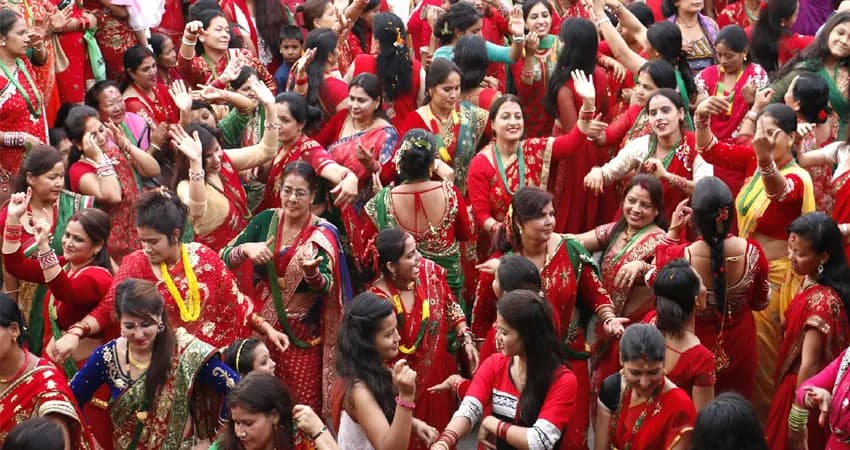
Nepal and the global Nepali diaspora are marking Haritalika Teej today, a major Hindu festival dedicated to Lord Shiva and Goddess Parvati. The festival, observed annually on the third day of the bright fortnight in the month of Bhadra (Bhadra Shukla Tritiya), holds deep spiritual and cultural significance.
Traditionally, women observe a strict fast to honor Goddess Parvati, who, according to Hindu scriptures, undertook severe penance to win Lord Shiva as her husband. The legend recounts that Parvati’s father, Himalaya, attempted to marry her to Lord Vishnu against her wishes. Seeking refuge, she confided in her friends, who helped her escape to a secluded forest. There, she performed rigorous austerities, eventually leading to her union with Shiva. This event is commemorated through the observance of Haritalika Teej.
While scriptures allow both men and women to observe the fast, the tradition is largely followed by women who pray for the long life, prosperity, and well-being of their husbands or future spouses. The fasting styles vary—from complete abstinence from food and water (nirjala) to light fruit or single-meal fasting—depending on personal capacity.
On the eve of Teej, families gather for the ritual feast known as “Dar.” Nutritious meals including rice, lentils, vegetables, milk, yogurt, fruits, and ghee are prepared and shared, believed to provide strength for the following day’s fast.
The day is marked by rituals such as lighting lamps, worshipping Lord Ganesha, and offering prayers to symbolic clay idols of Shiva and Parvati. The essence of Teej lies in seeking liberation from negativity, purification of mind and soul, and blessings of prosperity and marital harmony.
Beyond the religious aspects, Teej has evolved into a social celebration. Women visit their maternal homes, reunite with relatives and friends, exchange joys and hardships, and participate in traditional music and dance. In recent years, women from non-Hindu backgrounds have also begun observing the festival, reflecting its cultural inclusivity.
In Kathmandu, the Pashupatinath Temple and Shiva shrines nationwide are witnessing large gatherings of devotees today, with special worship, hymns, and vibrant festivities.