Neeraj Sharma Appointed eSewa CEO
Former Nabil Bank executive Neeraj Sharma has been appointed eSewa’s new CEO after Jagdish Khadka completed his four-year tenure. Sharma brings more than 25 years of banking and digital payments experience.
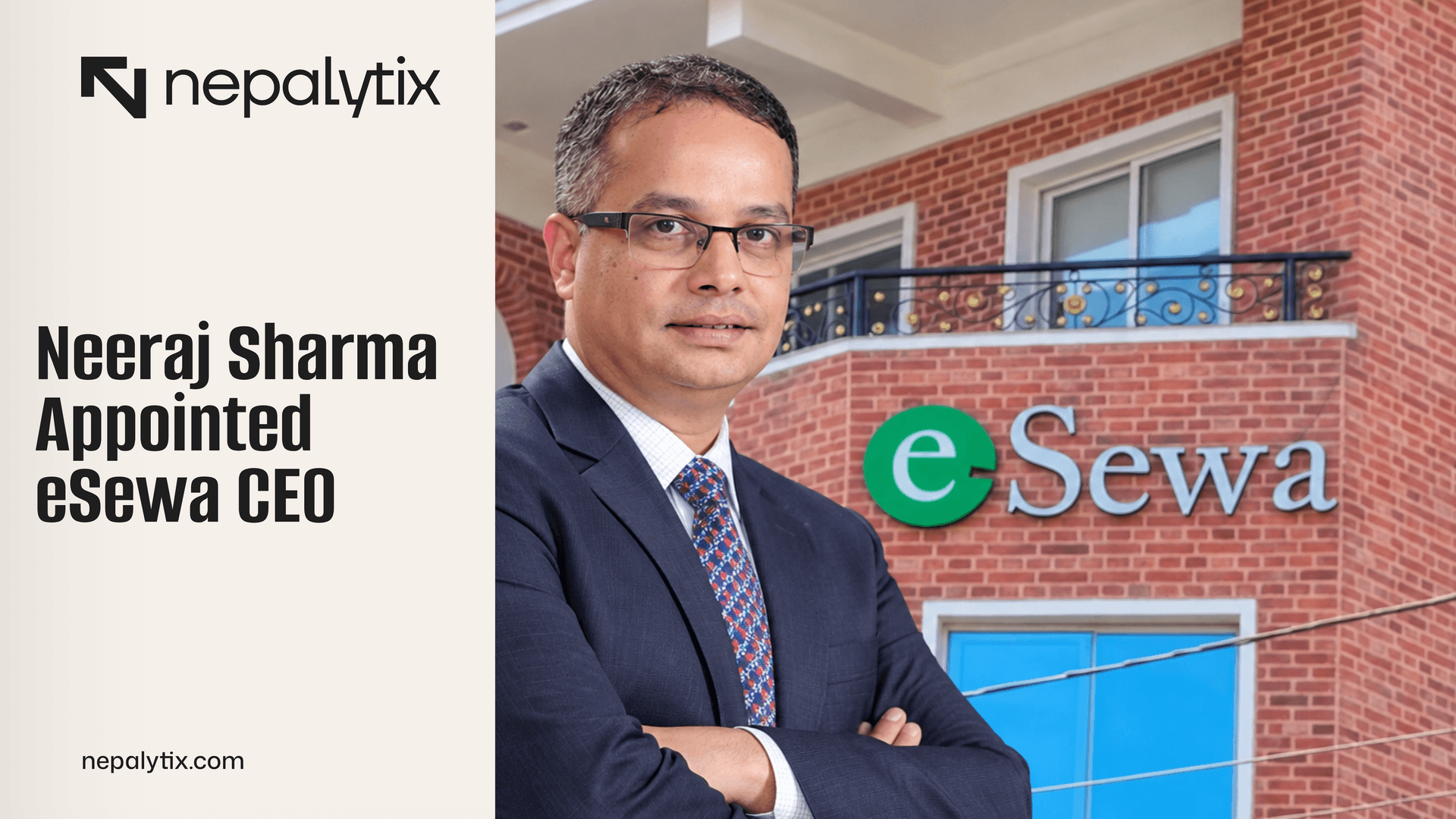
Neeraj Sharma, a former executive at Nabil Bank, has been appointed Chief Executive Officer of digital payment service provider eSewa.
Sharma succeeds Jagdish Khadka, whose four-year tenure at the company recently ended. Sharma has more than 25 years of experience in banking and digital payments, including around 18 years in various leadership roles at Nabil Bank.
Speaking to Kantipur, Sharma said his immediate priority would be to maintain eSewa’s position in Nepal’s digital payments market while improving customer engagement, service quality and access.
He said eSewa would focus on adding products and services based on customer needs while maintaining regulatory compliance and strengthening the user experience.
On eSewa’s previously reported plans for an initial public offering (IPO), Sharma said he had not yet formally joined the company and therefore did not have official information about the status of the process. He said he would seek to move the process forward if it remained underway.
Sharma said competition in Nepal’s fintech sector has intensified, making customer retention and service reliability key priorities. He highlighted uptime, ease of use, accessibility and payment security as areas requiring continued attention.
He also emphasized cybersecurity as digital financial fraud continues to pose a challenge. According to Sharma, security systems need continuous upgrades and vulnerabilities must be addressed immediately rather than relying on any single technology to provide complete protection.
Financial literacy will also be a focus. Sharma said users need greater awareness of scams, fraud and the risks associated with mule accounts. He said eSewa could expand financial-literacy programs, training and roadshows, particularly in areas facing higher risks.
Sharma identified intense competition, relatively weak financial literacy and rising cyber threats as major challenges for Nepal’s fintech sector.
He remains positive about the sector’s long-term growth, particularly in retail payments. He said wallets and banks can operate as complementary services, with customers keeping larger balances in bank accounts while using wallets for smaller day-to-day payments.
On central bank digital currency (CBDC), Sharma said Nepal Rastra Bank’s focus on wholesale transactions means the technology may have limited direct impact on retail-focused wallets such as eSewa.