Nepal and India Agree to Increase Power Exports to 1,650 MW, Accelerate Cross-Border Transmission Projects
Nepal and India have agreed to increase Nepal's electricity export capacity to 1,650 MW under a new bilateral energy agreement.
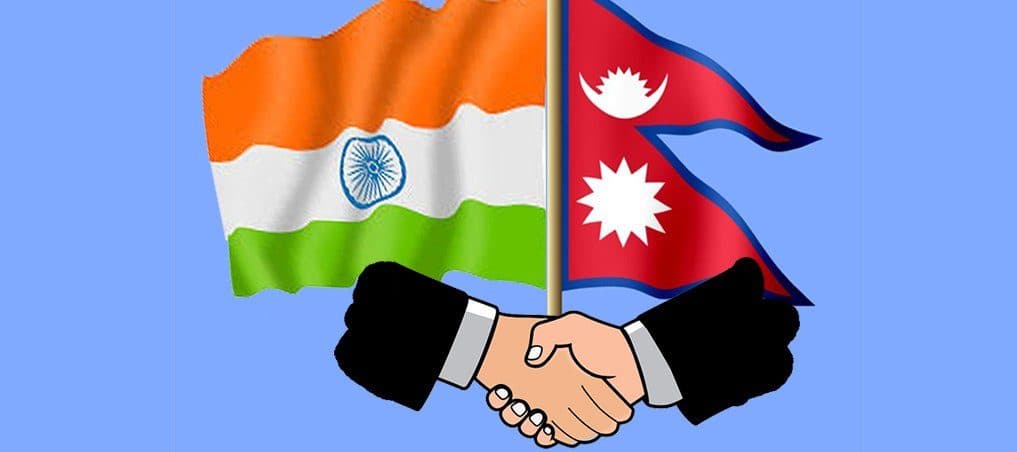
Nepal and India have agreed to increase Nepal's electricity export capacity to 1,650 megawatts (MW) following the 13th meeting of the Joint Steering Committee at the Energy Secretary level. The agreement also focuses on expanding cross-border transmission infrastructure, strengthening electricity trade, and enhancing cooperation in renewable energy.
According to Sandeep Kumar Dev, Joint Secretary at Nepal's Ministry of Energy, Water Resources and Irrigation, the existing Dhalkebar–Muzaffarpur and Dhalkebar–Sitamarhi cross-border transmission lines will continue to facilitate the import of up to 1,400 MW of electricity. More importantly, both countries agreed to raise Nepal's electricity export capacity from 1,100 MW to 1,650 MW.
The meeting also approved the Detailed Project Report (DPR) for the Chameliya–Jauljibi 220 kV double-circuit transmission line, with construction targeted for completion by December 2028.
Both sides further agreed to accelerate the establishment of a joint venture company to develop the New Purnea–Dododhara Bareilly 400 kV cross-border transmission line. Additional technical studies will also be carried out for the proposed Motihari–Nijgadh 400 kV and Lucknow–Kohalpur 400 kV transmission corridors.
Meanwhile, the New Butwal–Gorakhpur transmission line, originally planned as a 400 kV project, will initially operate at 220 kV under a technical agreement. Nepal's section of the transmission line is expected to be completed by August 2026, while the associated substation is scheduled for completion by December 2027. During the initial phase, the line will enable Nepal to import 130 MW and export 200 MW of electricity.
The meeting, held in Pokhara, was co-chaired by Sarita Dawadi, Secretary of Nepal's Ministry of Energy, Water Resources and Irrigation, and Pankaj Agarwal, Secretary of India's Ministry of Power. It followed the 13th meeting of the Joint Working Group, where officials reviewed technical aspects of bilateral energy cooperation.
Discussions also covered hydropower development, electricity trade, expansion of cross-border transmission infrastructure, grid synchronization, solar energy cooperation, green hydrogen initiatives, and capacity building for Nepali energy professionals. Both countries reaffirmed their commitment to accelerating ongoing and planned energy infrastructure projects.