NOC Stops LPG Sales to Kathmandu Businesses
Nepal Oil Corporation has stopped supplying LPG to commercial users through Kathmandu Valley depots, forcing hotels, restaurants and industries to source and transport gas from plants outside the Valley.
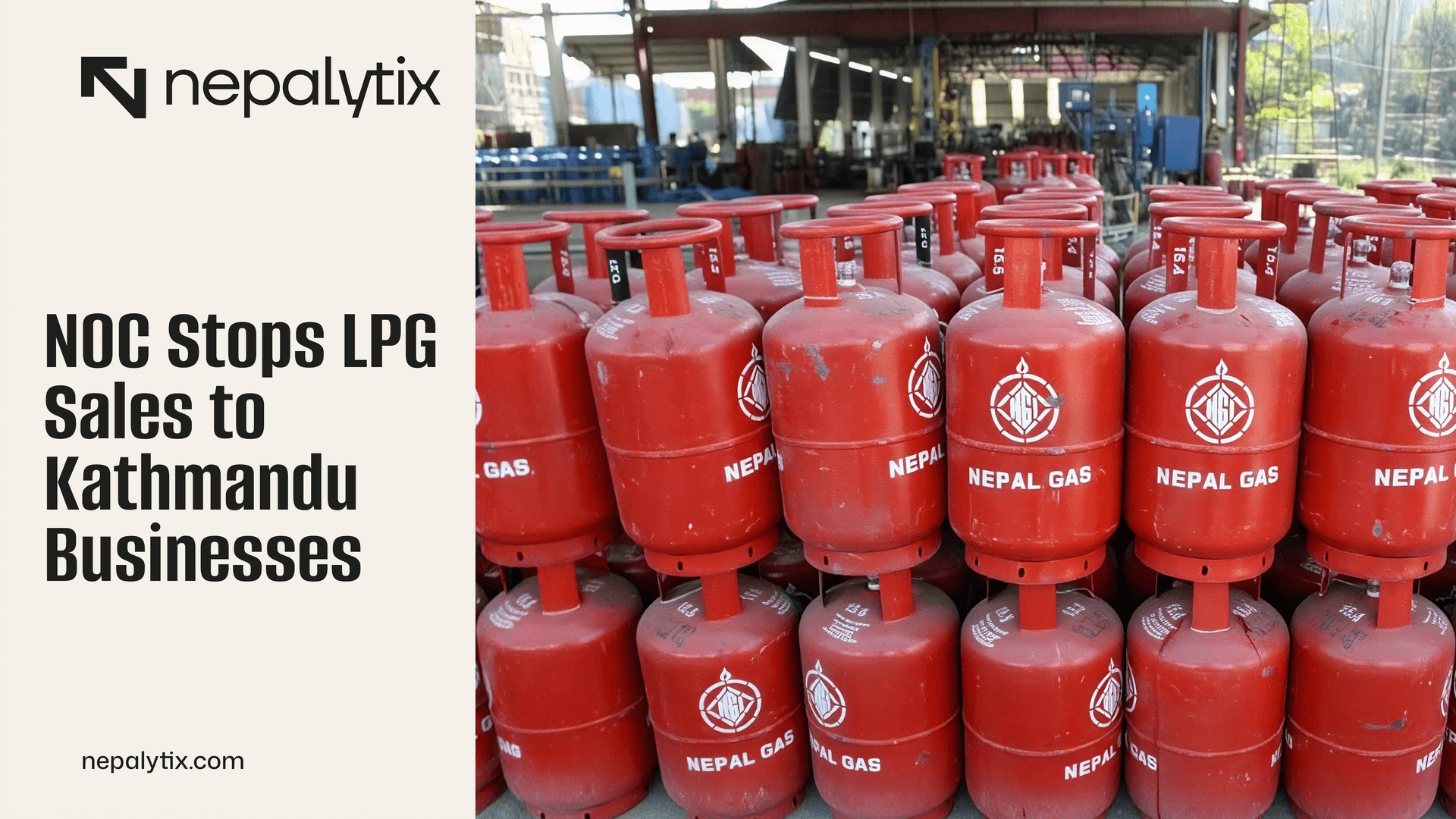
Nepal Oil Corporation (NOC) has temporarily stopped selling LPG to hotels, restaurants, industries and other commercial users through depots and sellers inside Kathmandu Valley, prioritizing household consumers amid growing supply concerns.
The move follows flood damage to the Naubise–Malekhu section of the Prithvi Highway, a major supply route connecting Kathmandu with the rest of the country. The highway has been damaged at three locations, with the most severe damage reported at Krishnabhir, around 23 km from Muglin toward Kathmandu. Authorities estimate that restoring the damaged road could take at least 15 days.
Under the new arrangement, large hotels, restaurants and industries will no longer be able to purchase LPG for commercial use from Valley-based gas depots and sellers. Instead, they must purchase LPG directly from plants outside Kathmandu Valley and arrange their own transportation, including vehicles.
LPG cylinders transported into the Valley from areas such as Hetauda, Chitwan and Nawalparasi also cannot be sold to commercial users inside Kathmandu.
NOC said the decision is intended to protect household supplies. According to its Gas Department, household demand for LPG remains high, and continued large-scale purchases by commercial establishments through the same distribution network could further tighten supplies for households.
The decision does not prohibit commercial establishments from using LPG. Rather, it shifts the logistical burden from the common retail distribution system onto businesses themselves.
That distinction matters for Kathmandu's service economy. Hotels, restaurants and LPG-dependent industries now face higher procurement and transportation costs, while businesses may also have to maintain larger inventories to avoid interruptions if the highway remains unreliable.
The move also comes after households in Kathmandu Valley have already faced LPG shortages for months. NOC's earlier shift from distributing half-filled cylinders to full 14.2-kg cylinders has further strained available supplies.
For households, the policy could improve access to LPG by reserving the Valley's existing distribution network primarily for residential demand. For businesses, however, the disruption effectively creates a separate commercial supply chain at a time when transportation infrastructure is already under stress.
The immediate concern is therefore not simply whether Nepal has enough LPG nationally, but whether the fuel can be moved into Kathmandu efficiently and distributed without competing with household demand.