Rasuwa Floods Damage Nine Bank Branches
Flooding in Rasuwa has damaged at least nine commercial bank branches, while communication remains disrupted and more than half of the affected branch staff remain out of contact.
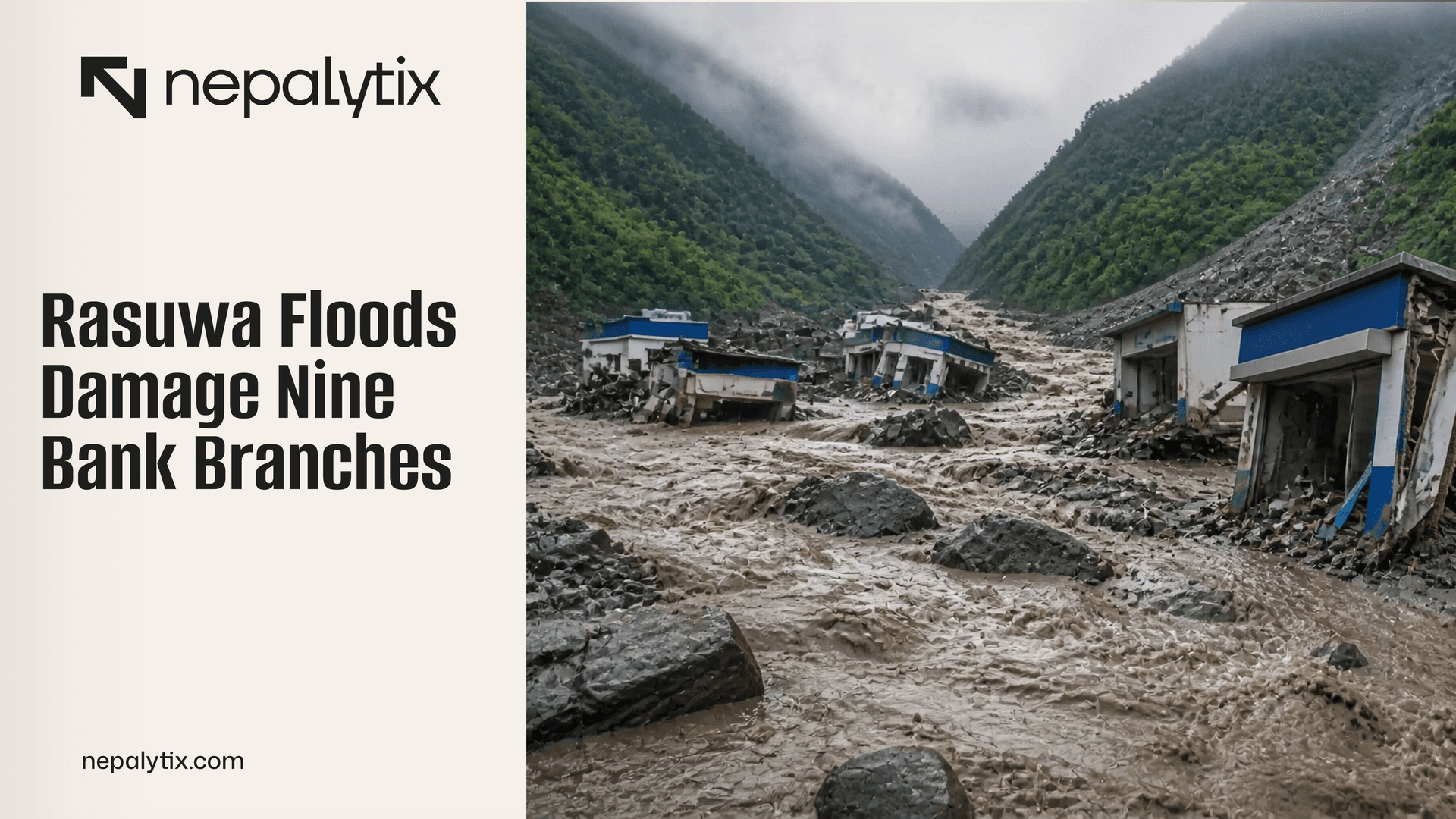
Severe flooding along the Bhotekoshi River in Rasuwa has damaged at least nine branches of commercial banks, with communication disruptions making it difficult for banks to determine the full extent of the damage and establish contact with employees.
According to Nepal Bankers’ Association President Santosh Koirala, all nine bank branches operating in the flood-affected area are believed to have suffered damage. Several branches have reportedly been swept away, while others have sustained extensive damage to their buildings and physical infrastructure.
The situation has also raised concerns over the safety of bank employees working in the affected area. Koirala said more than half of the employees at the affected branches have not yet been able to establish contact with their respective banks.
Some employees have managed to communicate with their banks and confirmed that they are safe. However, their workplaces have either been swept away or severely damaged by the floodwaters.
Branches of several major commercial banks were operating in the affected areas, including Nabil Bank, Prabhu Bank and Global IME Bank. Other banks with branches in the Timure area include Machhapuchchhre Bank, Sanima Bank, Laxmi Sunrise Bank, Himalayan Bank, NMB Bank and Nepal Investment Mega Bank.
The flooding struck the Timure area of Rasuwa on Wednesday morning, sweeping away settlements and damaging infrastructure along the Bhotekoshi River. The disruption of telephone and other communication services has made it particularly difficult for banks to verify the condition of their employees and branches.
The Nepal Bankers Association held an emergency meeting on Wednesday morning to assess the situation and coordinate efforts to respond to the damage.
The association is also coordinating with security agencies to intensify search and rescue efforts. According to Koirala, requests have been made to the Nepal Army, Nepal Police and other relevant agencies to assist in locating and rescuing employees who remain unreachable.
For banks, the immediate priority remains confirming the safety of their employees and assessing the physical damage to branches, equipment and other infrastructure. A clearer picture of the financial and operational impact is expected once communication with the affected area is restored.
The scale of the damage remains uncertain as rescue and assessment efforts continue, with banks and the Bankers’ Association working to establish contact with affected employees and gather information from the flood-hit region.