SEBON Says Only 17 Lakh of 80 Lakh Demat Accounts Are Active
SEBON says only around 17 lakh of Nepal’s 80 lakh registered Demat accounts are currently active highlighting widespread inactivity and the need for stronger financial literacy.
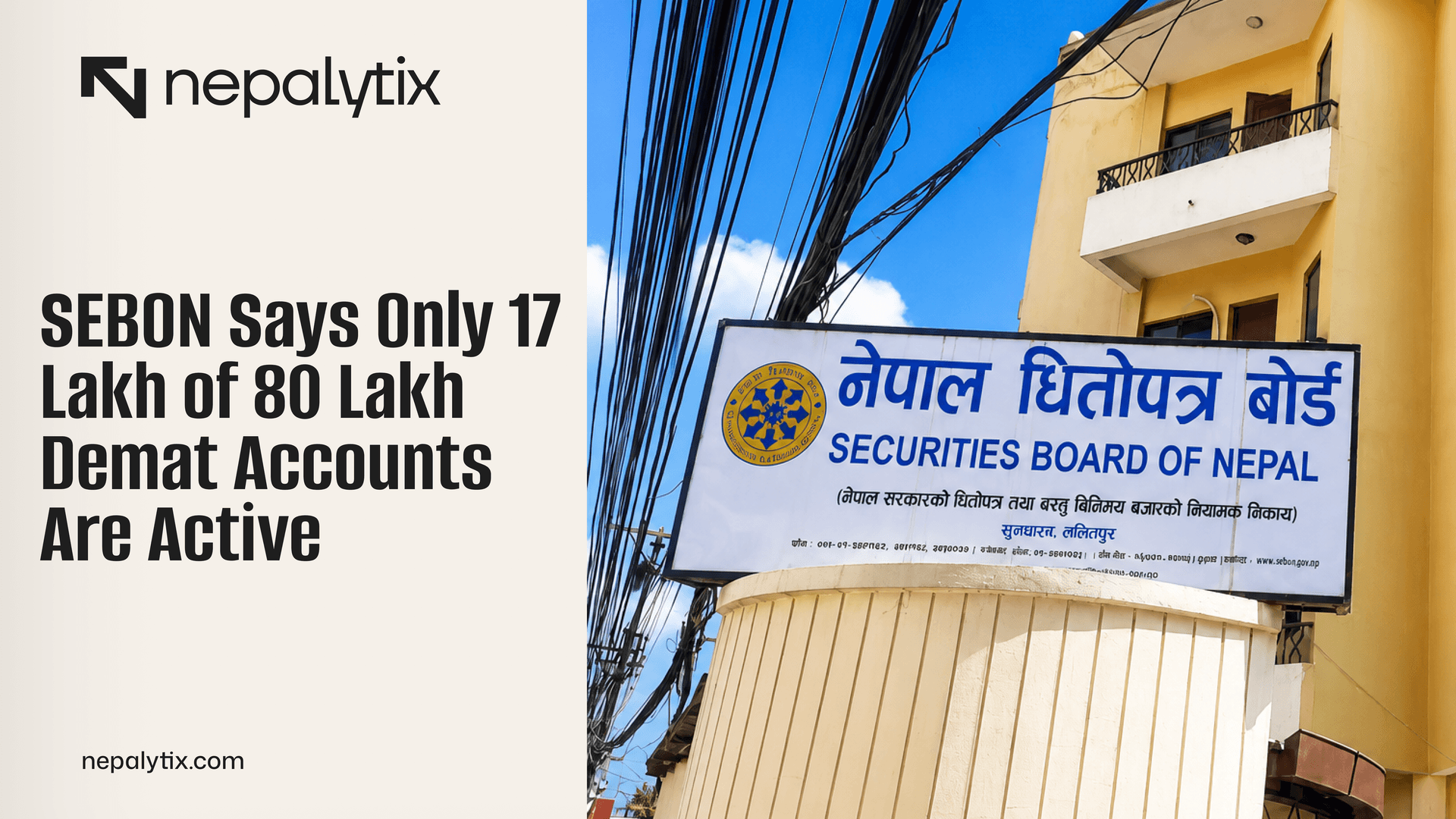
Only around 17 lakh of the 80 lakh Demat accounts registered in Nepal are currently active, according to Securities Board of Nepal (SEBON) Executive Director Rupesh KC.
Speaking at the second session of the Nepal Capital Market Discourse 2026, titled “Informed Investors, Strong Capital Market: Role of Awareness and Literacy,” KC said approximately 33 lakh Demat accounts have zero balances, pointing to a significant level of inactivity among registered investors.
KC said the level of investor activity can vary depending on individuals’ financial circumstances and their understanding of financial markets. He emphasized that investor protection is one of the three major pillars of the securities market and said measures are needed to encourage inactive investors to participate more actively.
According to KC, SEBON is preparing to conduct surveys and research through questionnaires to better understand investors’ financial conditions and levels of financial literacy.
He also highlighted the need for a national financial literacy strategy. SEBON has already prepared a framework aimed at strengthening financial literacy among investors and improving their understanding of the capital market.
KC also disclosed that approximately Rs. 1.23 billion has been accumulated in the Investor Protection Fund.
Under the existing provision, dividends that remain unclaimed by investors for five years are required to be deposited into the fund. KC suggested that allowing SEBON to operate the fund could make it more effective in protecting and supporting investors.
The high number of inactive Demat accounts highlights a broader challenge for Nepal’s capital market. While the number of registered investors has grown substantially, a large portion of account holders are not actively participating in the market, underscoring the importance of financial literacy, investor awareness and stronger engagement mechanisms.