Singapore Expands Robot Use Across Transportation, Airports and Public Safety
Singapore is increasingly integrating robots into daily life, expanding their use across transportation, airports, residential buildings and public safety.
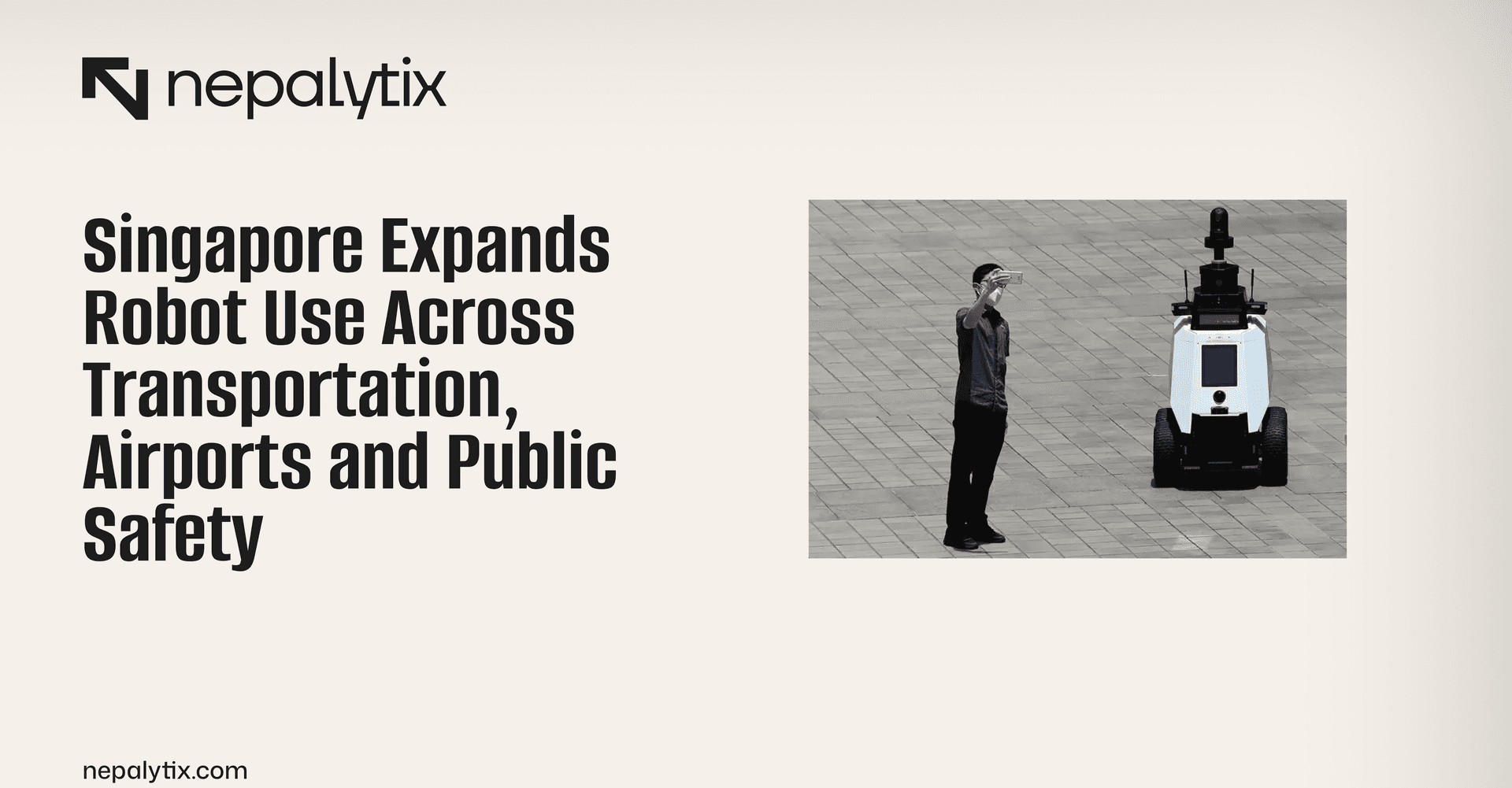
Singapore is expanding the use of robots across transportation, airports, residential buildings and public safety, making automated technology an increasingly important part of everyday life. With more than 300 robotics companies involved in research, development and commercial applications, the country is preparing to deploy robots as assistants across various sectors.
The southern coastal tourist island of Sentosa has become a new testing ground for autonomous vehicles. From early 2027, tourists and visitors are expected to be able to book autonomous minibuses through ride-hailing apps to travel between transport hubs, hotels and tourist attractions across the island.
The service will operate through a partnership between the Sentosa Development Corporation and ride-hailing company Tada. The buses will be developed by WeRide, a company headquartered in Guangzhou, China. Each vehicle can carry up to eight passengers and is equipped to slow down when detecting pedestrians and other vehicles, as well as turn when necessary. During a recent trial, the buses operated smoothly even in rainy conditions. Screens inside the vehicles display real-time, three-dimensional views of surrounding vehicles and pedestrians.
This is not the first autonomous bus trial in Sentosa. Since July 2025, WeRide vehicles have been permitted to operate within a 0.49-square-kilometre area of Resorts World Sentosa. The new trial is expected to cover the western part of the island from 2027, with plans for gradual expansion to other areas.
A trained safety operator will initially be present in each bus. WeRide's International Business Director, Nicholas Te, said fully driverless services could be introduced in the future once the necessary trials are completed and safe operations are established. Sentosa Development Corporation Chief Executive Officer Thien Kwee Eng said the goal is to turn Sentosa into a "living laboratory" for testing new transportation technologies.
Robotics trials are also underway in other parts of Singapore. Autonomous robots are being tested for goods delivery, cleaning and security patrols in the Punggol Digital District, while automated construction equipment is being tested in the Jurong Innovation District. Autonomous ships and drones are also undergoing trials in the maritime sector.
The use of robots in everyday public services is also increasing. From late August to mid-September this year, a 1.27-metre-tall humanoid robot was deployed at Little India MRT station. Wearing a green vest, the robot assisted passengers with directions.
Robots are also being used for cleaning at Changi Airport. In addition, social service organisation Lions Befrienders has deployed autonomous delivery robots in residential buildings with large elderly populations. These robots can operate elevators independently and deliver food, medicine and other essential items directly to residents' homes.
Singapore is also expanding the use of robots in public safety. In September, the country launched the Home Team Humanoid Robotics Centre. Robots are trained there to handle high-risk tasks such as investigating explosion sites, managing hazardous liquids and searching for prohibited items inside prisons. The initiative is expected to reduce the need for security personnel to be directly exposed to dangerous situations.
Singapore plans to deploy its first humanoid robot alongside security officers in real operational environments by 2028.
According to a report published this year by the Singapore Economic Development Board, more than 300 robotics companies are operating in the country, focusing on research and development, technology manufacturing and deployment. These companies are active in sectors including manufacturing, healthcare, hospitality, critical infrastructure, transportation and supply chain management.