Zhangmu Closure Disrupts Tatopani Trade Route
China has indefinitely closed Zhangmu Port amid flood concerns, disrupting the Tatopani trade route just weeks before Dashain and Tihar and leaving millions of rupees worth of imports stranded.
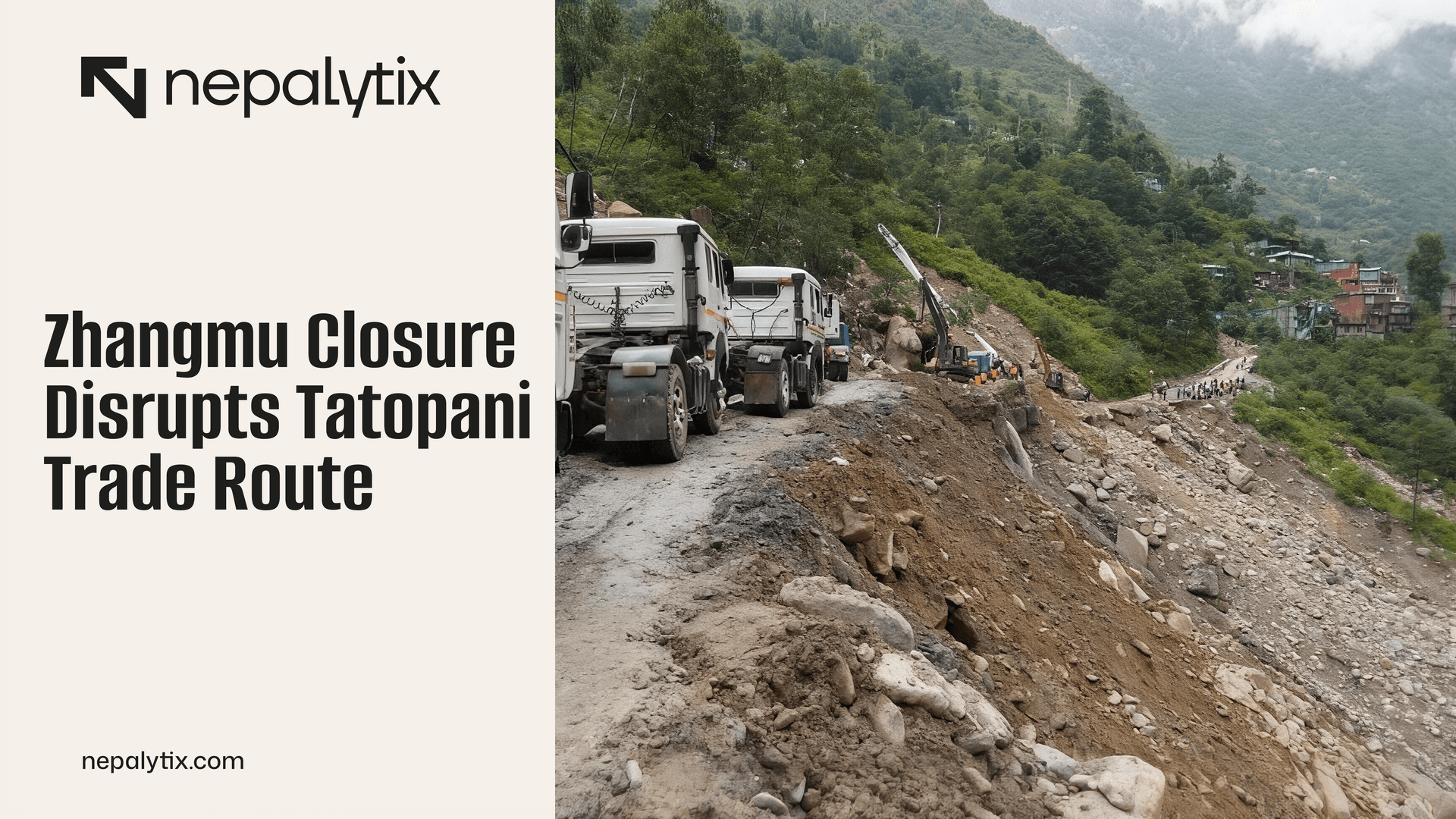
Nepal’s trade with China has suffered another setback after China indefinitely closed Zhangmu Port, the Chinese-side port opposite Nepal’s Tatopani border point, citing concerns over possible flooding in the Bhotekoshi River.
The closure comes shortly after the Rasuwagadhi border route was severely damaged by floods and just days after the Tatopani route had resumed limited cargo movement. With both major northern trade routes facing disruptions, Nepal’s options for overland imports from China have narrowed significantly ahead of the Dashain and Tihar festival season.
The Tatopani Customs Office said China informed Nepal by email that Zhangmu Port had been temporarily closed. Customs operations and cargo movement have been suspended, while Chinese administrative personnel have reportedly been relocated to safer areas.
The closure appears to be linked to concerns that the Bhotekoshi River could experience flooding similar to the recent disaster in Rasuwa. China had also earlier halted container movement at Khasa for several days because of construction work, with operations previously expected to resume by September 3.
The timing is particularly significant because the Tatopani route had only recently reopened after landslides disrupted the 26-kilometre Bahrabise–Kodari section of the Arniko Highway from July 15.
Following repair work, limited cargo movement resumed, with eight containers entering Nepal on August 28. The latest Zhangmu closure has once again stranded cargo carriers on the Chinese side.
Containers destined for Nepal are currently being held in Nyalam, while employees of Chinese transport companies are also facing prolonged work stoppages.
The disruption is particularly concerning for fruit imports. Around 60 containers carrying fruits worth approximately NPR 400 million have already been stranded in Nyalam and Tingri for around 45 days, according to traders.
The fruits are being stored in refrigerated containers and remain safe for now, but prolonged delays could increase costs through additional parking, storage and transportation charges.
Those higher logistics costs could eventually be passed on to consumers, increasing the prices of imported fruits in Nepal.
The timing also creates a wider festival-season supply risk. Traders typically bring in significant quantities of fruits and other consumer goods ahead of Dashain and Tihar, when household consumption and retail activity increase sharply.
If Zhangmu remains closed for an extended period, importers could struggle to bring goods into Nepal in time for the festival market. With Rasuwagadhi also facing major flood-related disruption, the country is effectively dealing with problems across both major northern China trade corridors.
The latest closure therefore goes beyond a border disruption. It threatens to increase delivery times, inventory shortages and logistics costs at a time when demand is about to rise.
For Nepal, the episode also highlights the vulnerability of relying heavily on a limited number of cross-border road corridors for imports from China. Restoring reliable access through both Tatopani and Rasuwagadhi, while maintaining alternative routes, will be important to prevent temporary infrastructure disruptions from turning into broader supply and price shocks.