Nepal Pushes Ahead With Mandatory Embossed Number Plates Despite Lack of Scanners
Nepal’s government has mandated embossed number plates from October 1, despite lacking the machines to read them, sparking public backlash.
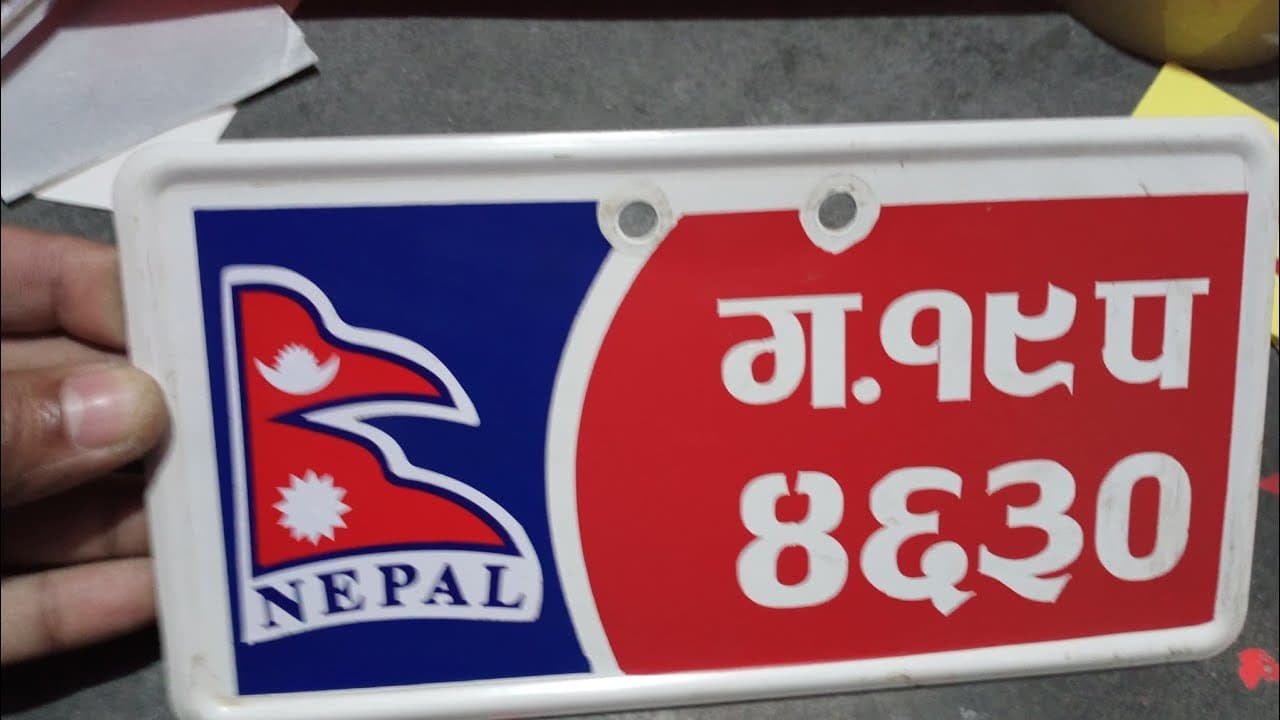
Kathmandu — Nepal’s government is moving forward with its plan to make embossed number plates mandatory for all vehicles starting October 1, even though it does not yet possess the machines required to read the plates. The decision, widely seen as rushed and poorly prepared, has fueled criticism from transport operators, legal experts, and the public.
Embossed plates, made of aluminum with digitally engraved characters, were introduced to enhance vehicle identification through cameras and GPS trackers. However, enforcement has been undermined by the absence of plate-reading machines nationwide, leaving traffic police unable to validate them on the ground.
The directive, endorsed by the Ministry of Physical Infrastructure and Transport on August 20, requires all provincial transport offices to enforce installation when registering, renewing, or transferring ownership of vehicles. Fees have been set at NPR 2,500 for motorcycles, NPR 2,900 for three-wheelers, NPR 3,200 for cars, and NPR 3,600 for heavy vehicles.
Critics argue the policy violates Nepal’s earlier commitment to allow embossed plates in both Nepali and English scripts. Instead, the government has pushed exclusively for English plates, sparking accusations of undermining national identity. In 2018, the Supreme Court had temporarily halted the scheme, citing constitutional concerns, but later lifted the ban in 2019.
Despite the legal clearance, widespread opposition persists. On Monday, the National Federation of Public Transport Operators urged members to resist implementation, calling the policy “an unnecessary financial burden” that benefits foreign contractors while exposing citizens’ personal data to security risks.
Observers also point to Nepal’s weak digital infrastructure. With official websites frequently hacked and only a few imported plate scanners in limited use, experts question the government’s ability to enforce the program effectively. Transport analysts warn the October 1 deadline is unrealistic without adequate preparation and risk management.